How to Hook Reluctant Readers Without Lowering Rigor
How to Hook Reluctant Readers Without Lowering Rigor
Every teacher knows the feeling: you hand out a reading passage, and before pencils even hit paper, the sighs begin.
Heads go down on desks. Students rush through questions with random guesses just to finish, or they disengage entirely.
When dealing with reluctant readers, our initial instinct might be to shorten the text, simplify the vocabulary, or lower the bar. But lowering rigor isn’t the answer—changing the purpose of the reading is.
When students are handed standard comprehension drill sheets, they read passively (or not at all). But when you turn reading into an active investigation where their mission is to crack a case? Everything changes.
Here is how you can use gamified reading mysteries to hook your most hesitant readers while keeping comprehension standards high across Grades 1 through 6+.
1. The Power of the “Information Gap”
Reluctant readers often struggle because they lack an immediate reason to care about the text.
By framing reading passages as detective case files, you create a psychological information gap. Students aren’t just reading to answer five multiple-choice questions at the bottom of a worksheet—they are reading to find out who committed the crime, where the missing item went, and why the suspect acted.
When you pair that story with an atmospheric video hook to kick off the lesson, the buy-in happens in seconds.
Choosing the Right Mystery for Your Students
Because every classroom has diverse reading abilities, I’ve designed three distinct reading mystery series. While grade levels are listed as helpful targets, you know your students best! These flexible tiers allow you to meet your readers right where they are.
Best for: Early readers, building foundational inference skills, and small-group literacy rotations.
If you teach early elementary or have older students who need significant reading confidence boosts, the Junior Reading Mysteries are designed specifically for them.
The Setup: Accessible, decodable storylines with rich visual clues and guided detective questions.
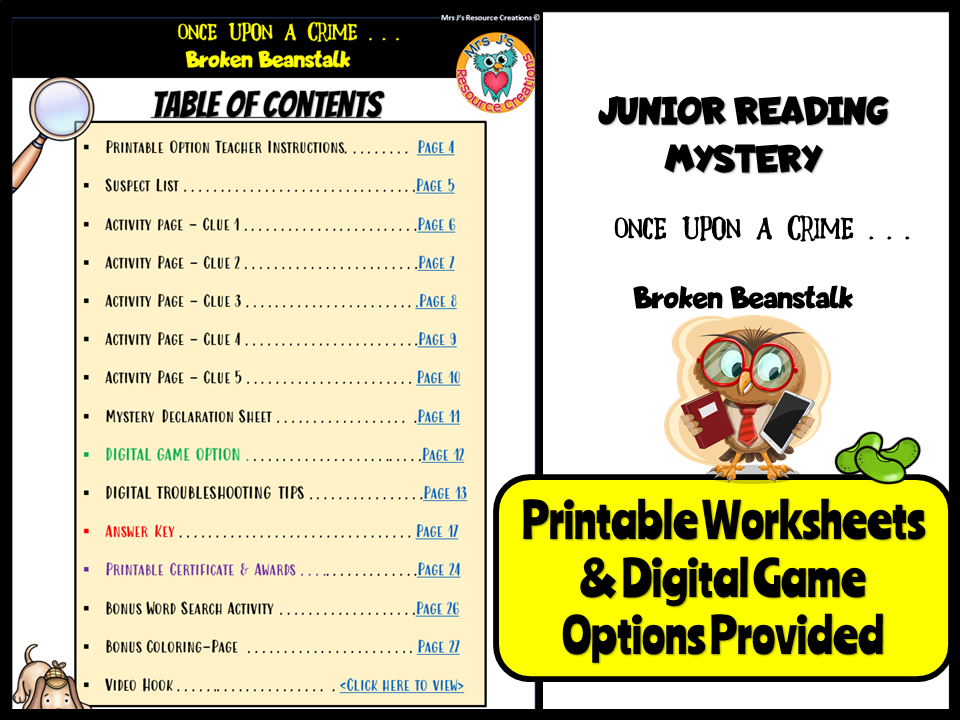
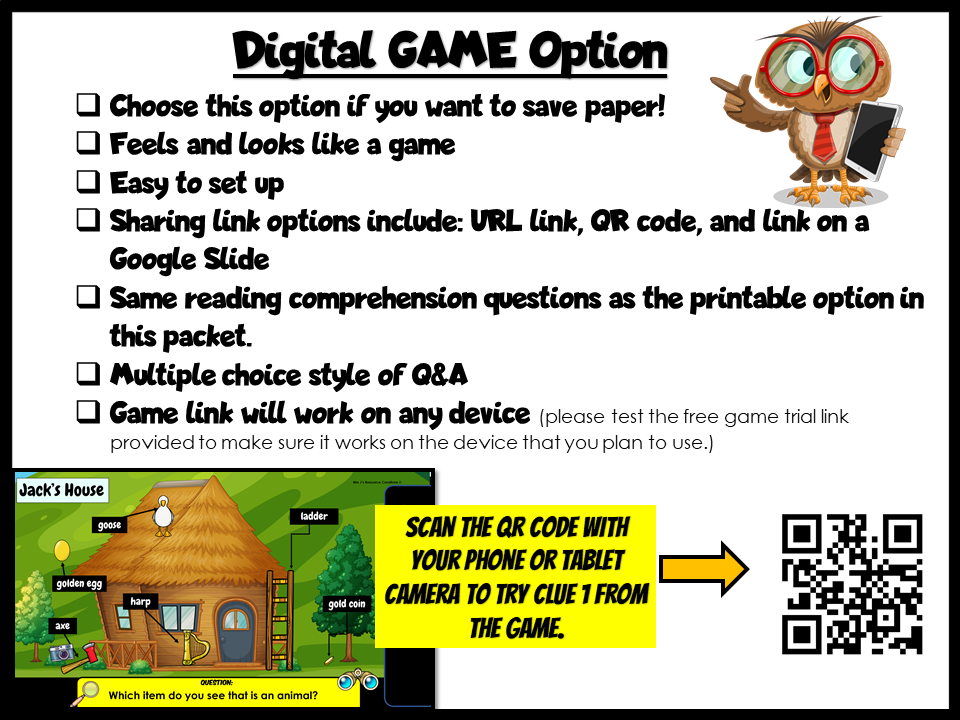
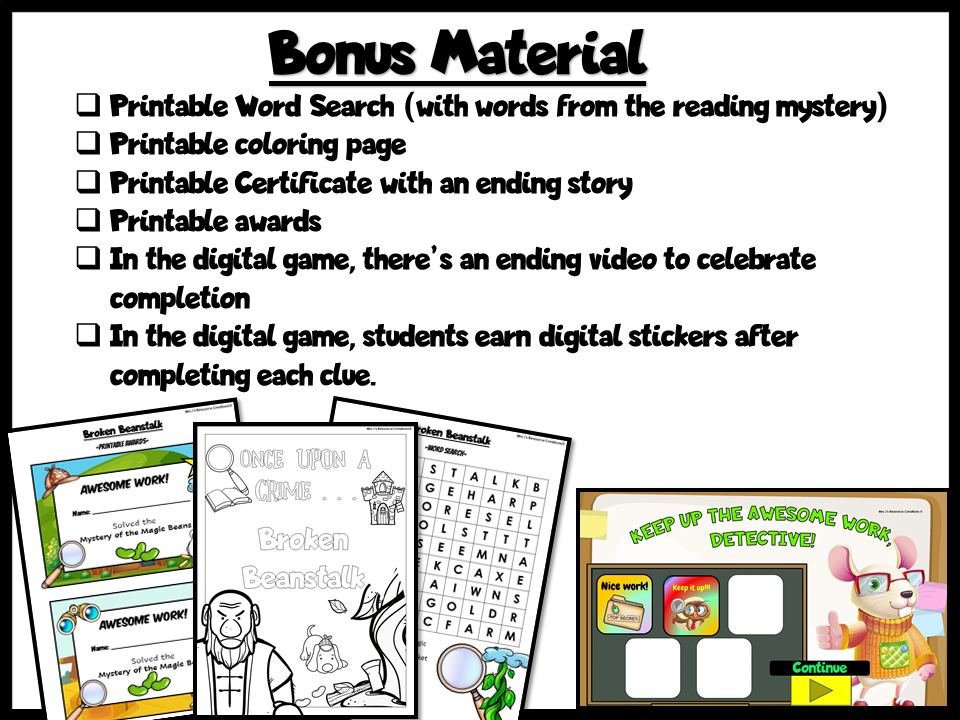
Format Flexibility: Every single Junior Mystery pack includes BOTH the printable worksheet files and the interactive Digital Graphic Game format in the same download. You can print the case files, assign them digitally, or blend both together seamlessly.
Multimedia Magic: Each mystery comes complete with an engaging animated video hook to kick off the case and a mini short video ending to celebrate their detective success!
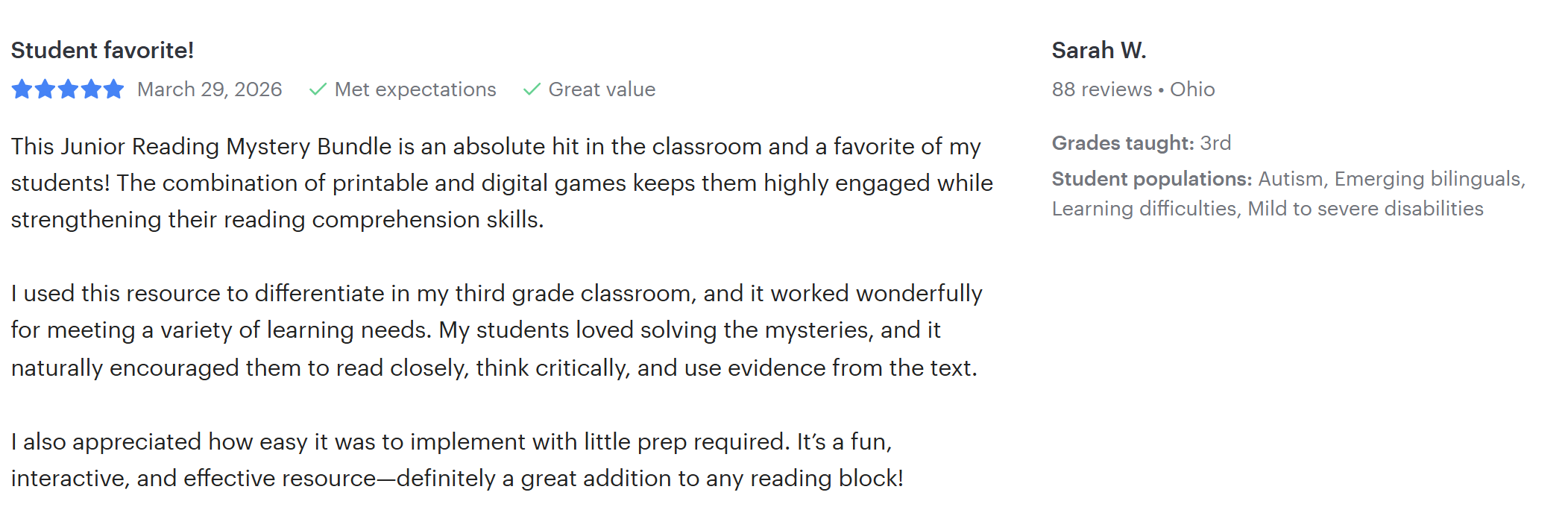
See how other teachers are using this in their classrooms:
Best for: Building close-reading stamina, vocabulary, and cross-checking evidence.
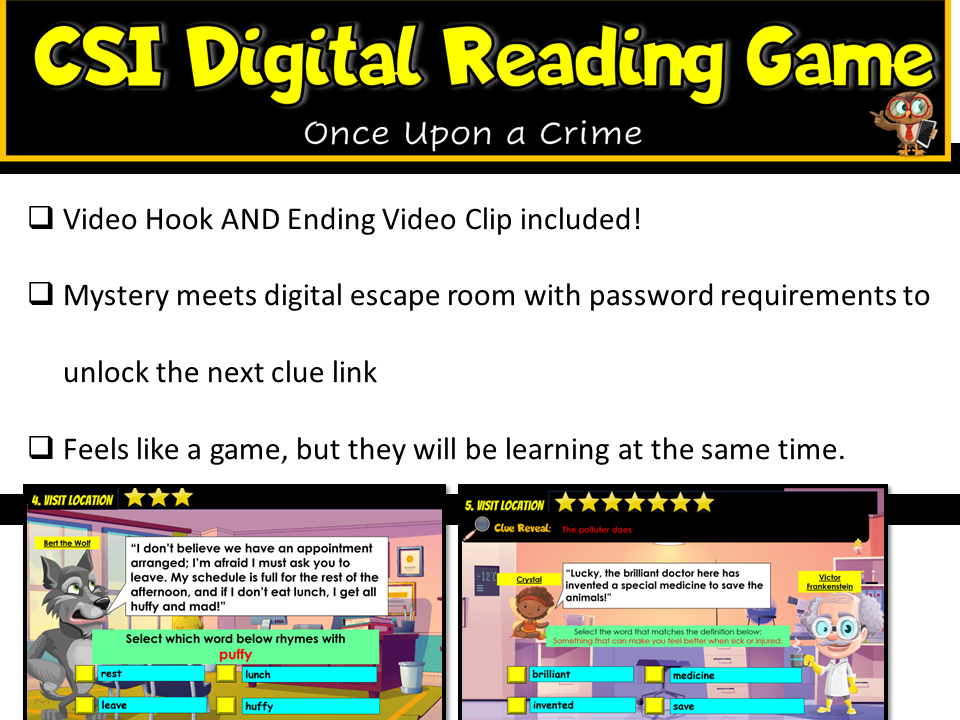
Fractured fairy tales meet detective work! The Once Upon a Crime series takes familiar storybook worlds and flips them upside down with missing artifacts, suspect line-ups, and interesting plot twists.
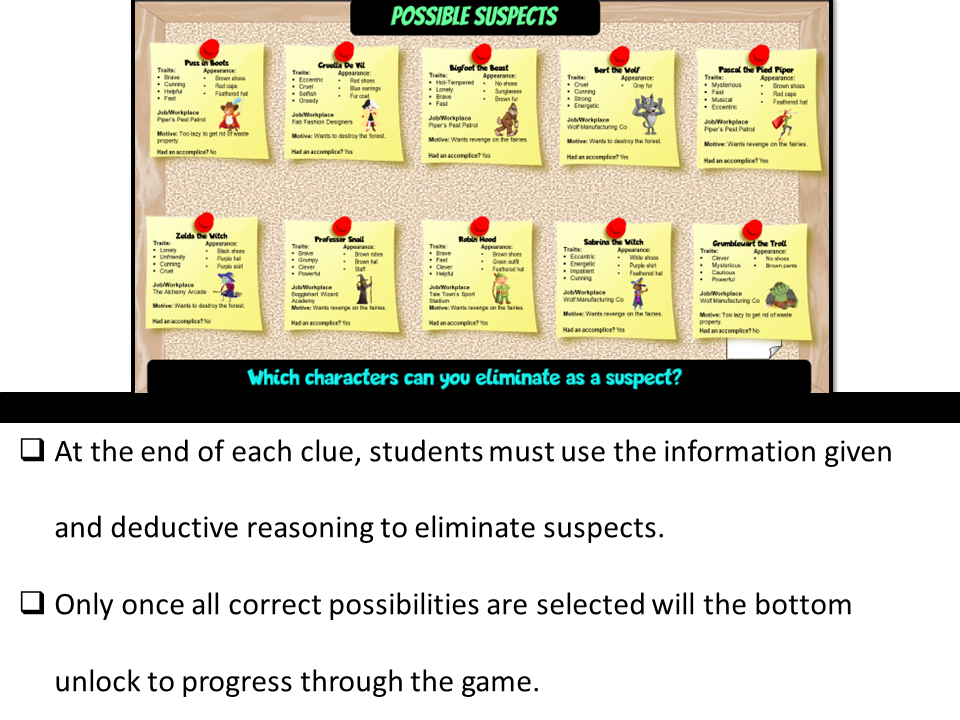
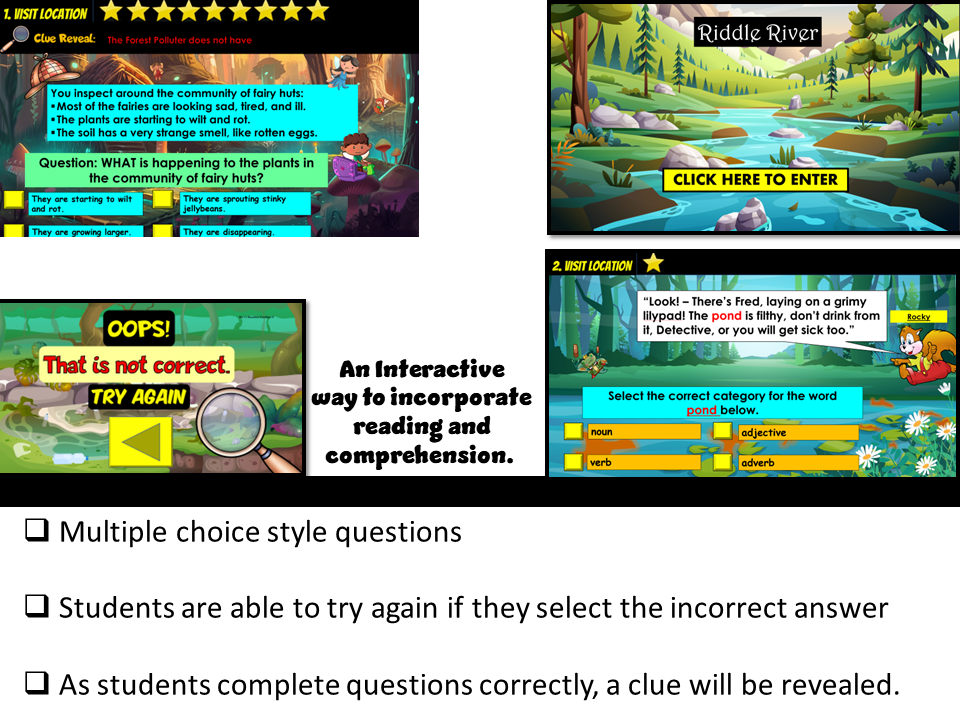
High-Stakes Investigation: Students must read passages and complete comprehension or vocabulary activities to unlock important clues. The clues will help them narrow down a suspect list until only one remains!
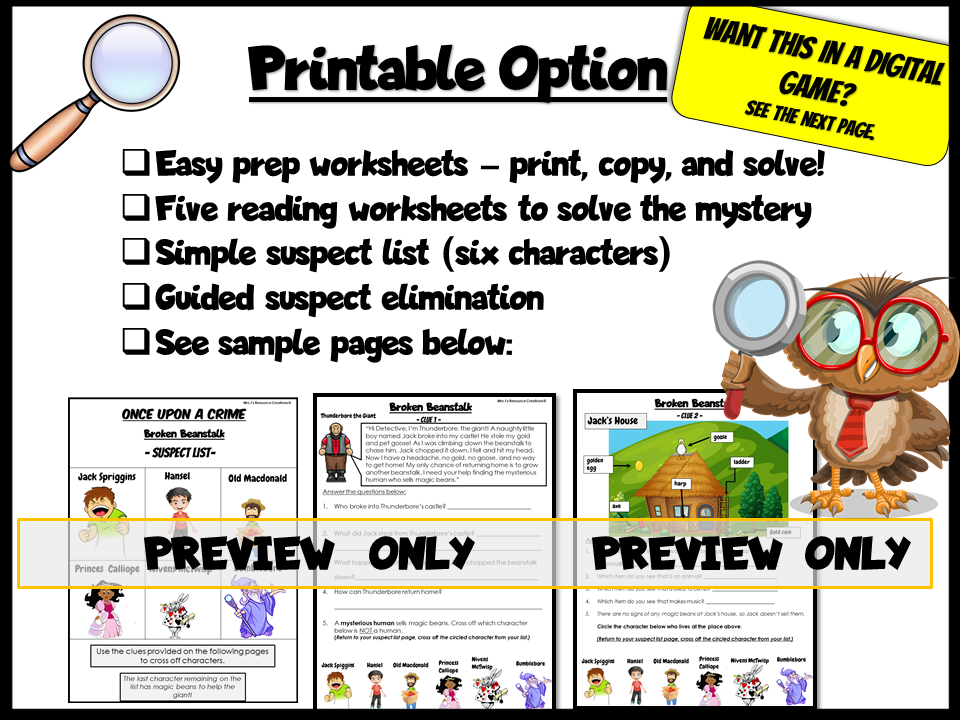
Choose Your Format: You can grab these as printable worksheet sets (which include differentiated options and Google Slides versions) or as standalone Digital Graphic Games. If you love having ultimate classroom flexibility, there is also a Duo Bundle available at a discount so you get both formats! (Stay tuned for my next blog post, where I break down the key differences between these two formats and how to choose the right one for your setup).
Multimedia Teasers: Every Once Upon a Crime mystery includes our signature atmospheric video hook and celebratory video ending.
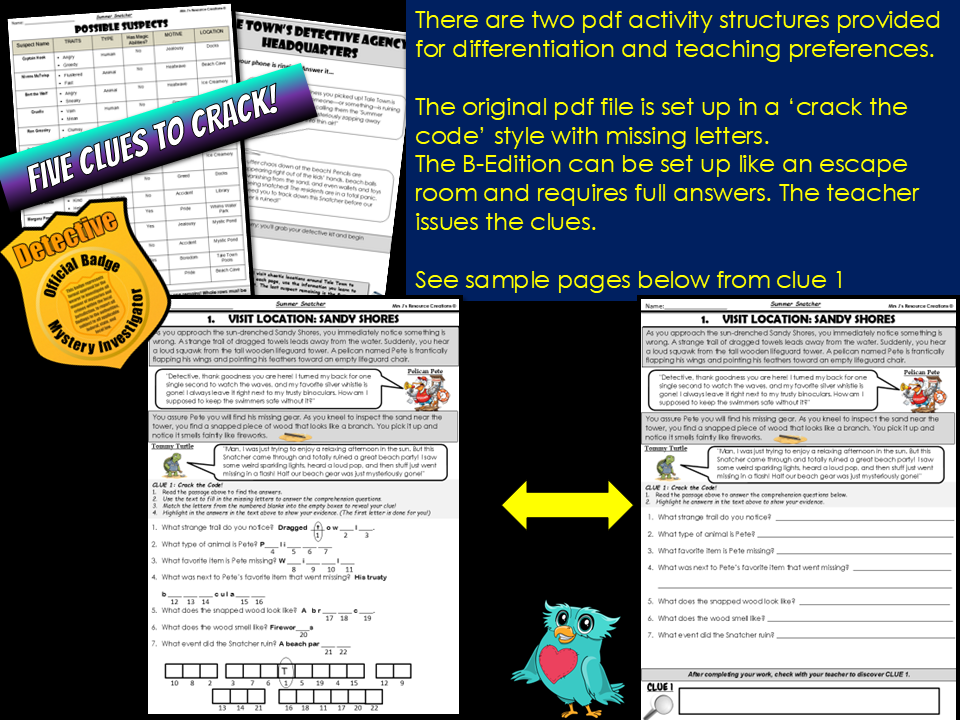
Built-In Differentiation in the worksheets style pack:
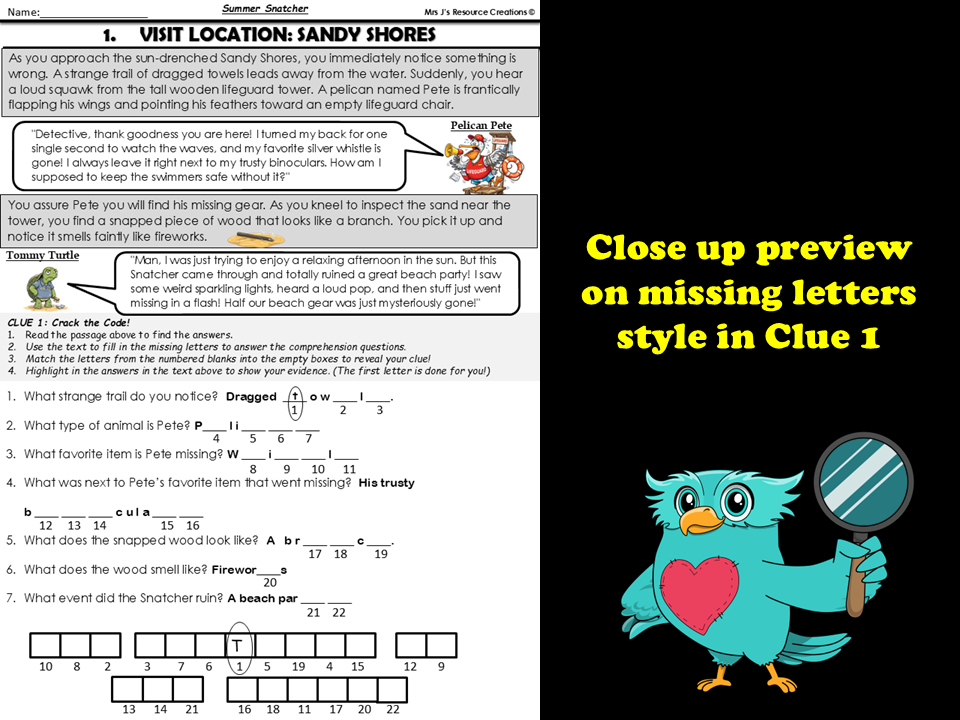
Standard Edition: Uses the classic “crack-the-code” missing letter format for built-in self-checking.
B-Edition: Removes the missing letter mechanism, requiring students to write out full answers (the teacher reveals/provides the clues as students progress).
Vocabulary Support: Includes optional word banks to provide targeted scaffolding where needed.
Reading Comprehension Worksheets Style Sample below from Summer Snatcher
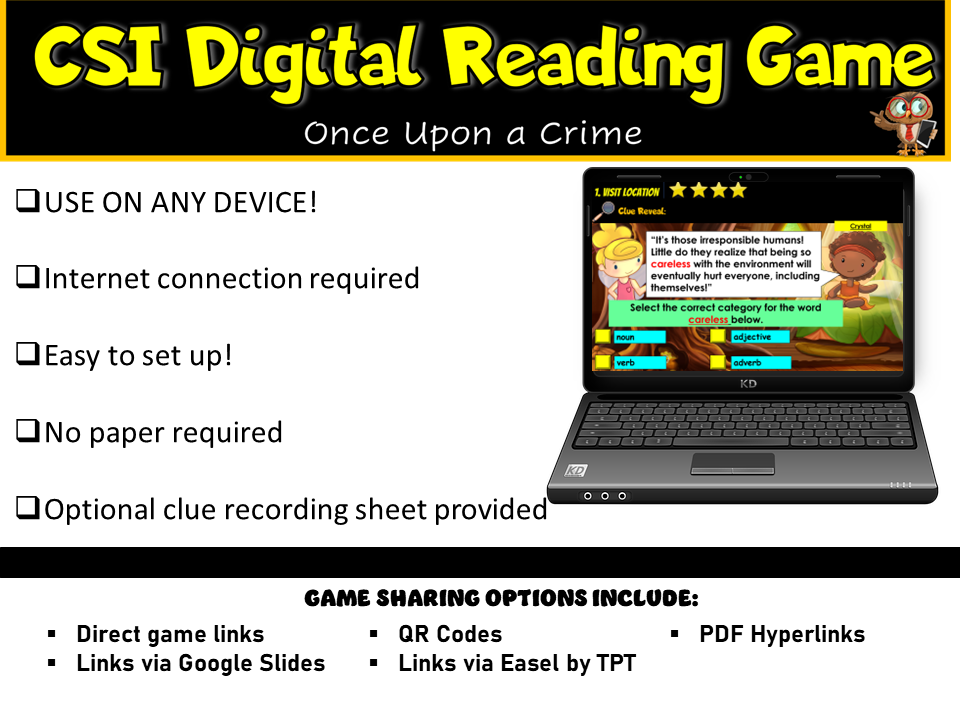
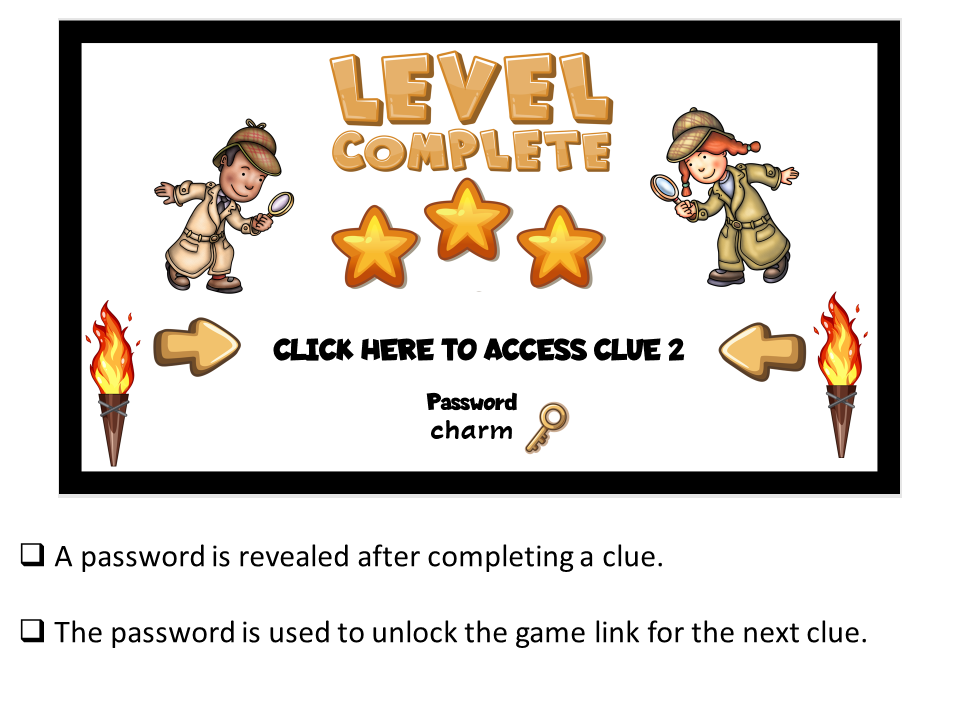
Sample images from a CSI Digital Reading Mystery ‘Once Upon a Crime’ Game – this preview is from Forest Grime
See how other teachers are using this in their classrooms:
Best for: Upper elementary, middle school, and advanced critical thinking.
When students reach upper elementary and middle school, they crave maturity and challenge. The Private Eye CSI Literacy Mysteries are the most demanding series in the collection—designed to make students genuinely think and analyze like real detectives.
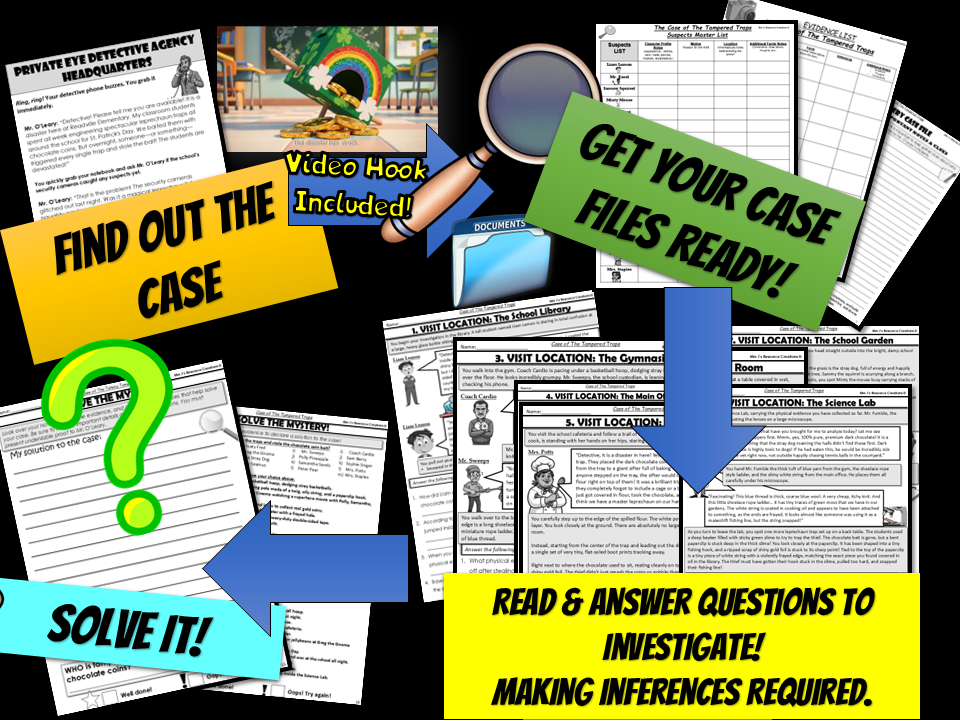
True Detective Thinking: Students cannot skim or guess their way through these cases. They must analyze witness statements, make deep inferences, synthesize complex clues, and look for contradictions in suspect alibis. While guided comprehension questions keep their thinking on track, students must ultimately make the final deduction on who did it.
New Video Hooks Included: Due to massive teacher demand, all Private Eye CSI Literacy Mysteries now feature animated video hooks to set the stage and pull your upper-grade detectives into the case from minute one! (Currently, these don’t feature animated ending videos, but I always listen to teacher feedback—let me know in the comments if that’s something you’d love to see added!)
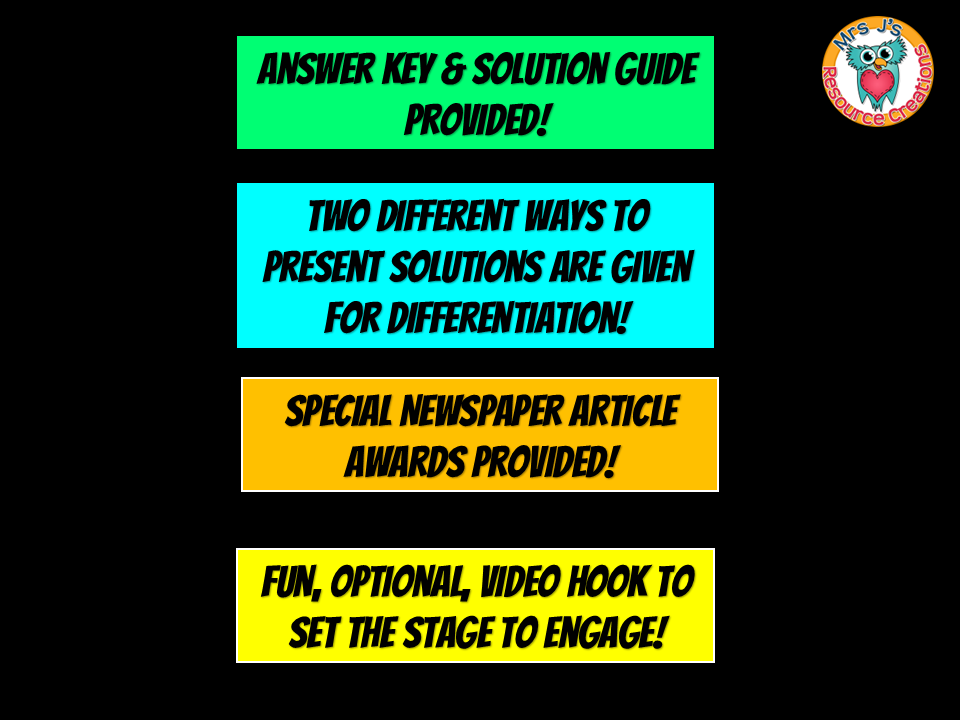
The “Case Closed” Newspaper Wrap-Up: Instead of a video ending, these mysteries conclude with a realistic wrap-up newspaper article. Once students solve the mystery, reading the newspaper debrief delivers immense satisfaction and concludes the case with authentic informational-text practice.
See how other teachers are using this in their classrooms:
3 Quick Tips to Launch Your First Mystery Day
Dim the Lights & Play the Video Hook: Treat the animated video like a cinema trailer. It signals an immediate shift in the classroom atmosphere and locks in full attention.
Encourage Detective Talk: Let students work in pairs or detective squads. Listening to reluctant readers actively debate evidence from the text is the ultimate win for reading comprehension.
Celebrate the “Case Closed”: Whether it’s playing the celebratory video ending or reading the final newspaper report, give students that rewarding payoff for their hard work.
Ready to Turn Reluctant Readers into Case-Solving Detectives?
You don’t need to water down your literacy block to get high engagement. By turning comprehension into a mission, even your most hesitant readers will be begging to read the next clue.
🎬 Stream Free Hooks: Want to preview the animations with your class first? Browse the Video Hook Library.
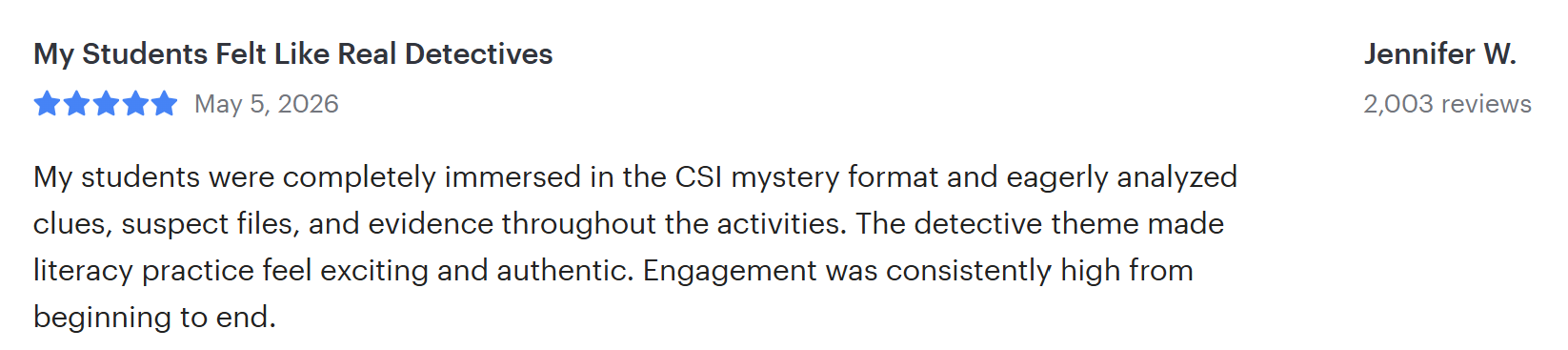
I also offer these reading mysteries on my TPT Store, which I’ll link below. You can also check out the thousands of positive reviews on these teaching resources too:
Which grade level or reading mystery series are you most excited to try with your readers this term? Drop a comment below—and don’t forget to let me know if you want video endings added to the Private Eye series next!