Engaging Classroom Activities to Spark Modern Skills with the Power of Pictures
As a teacher, you have probably noticed how quickly your students’ eyes light up the moment you project an intriguing image, visual puzzle, or short video clip onto the board. In a world where kids grow up surrounded by visual media, harnessing the power of pictures is one of the fastest ways to turn passive listeners into active thinkers.
Rather than fighting for attention with walls of plain text, we can use visual learning tools to build deeper comprehension, observation, and storytelling skills. Here is why visual processing works so well—and four practical ways to use it in your classroom this week.
The Power of Visual Processing
Our brains are wired for visual information. Research shows that we process images dramatically faster than text and remember far more of what we see and discuss compared to what we passively read. This isn’t just academic theory—it is something we see every day when a single diagram or picture clue makes a complex concept click for a struggling learner.
Today’s students are naturally attuned to visual storytelling, creating a wonderful opportunity for educators to bridge the gap between visual media and meaningful classroom learning.
1. Make Learning Personal with Digital Photo Albums
Think of digital photo albums as modern-day student portfolios with an investigative twist. Instead of only collecting finished tests at the end of a term, students can document their learning journey through images, screenshots, and visual notes. Here is what makes them so effective:
Student Ownership: Students take ownership of their learning by curating their own collections of hands-on builds, math models, and projects.
Cross-Curricular Flexibility: Visual documentation works across all subjects, from science experiments and geometry hunts to literature interpretations.
Digital Literacy Growth: Organizing and captioning photos naturally builds essential digital literacy skills.
Visible Progress: Regular review of photo collections reinforces learning and shows students their own growth over time.
When implementing digital albums, establish clear classroom guidelines about when photo-taking is allowed and ensure your school’s student privacy policies are followed.
2. Bring Scrapbooking & Visual Storyboarding into the 21st Century
Modern classroom scrapbooking combines creativity with critical thinking. Using accessible tools like Canva Education, Google Slides, or hands-on paper collage templates, students can:
Create Visual Summaries: Distill complex history, science, or reading topics into an annotated visual board.
Develop Narrative Skills: Practice story structure and cause-and-effect through intentional image sequencing.
Practice Design Principles: Learn how headings, captions, and layout communicate key ideas clearly.
Collaborate on Group Projects: Work together in small detective or research teams to assemble visual evidence.
3. Spark Deduction with Visual Writing Prompts & Silent Video Hooks
One of the easiest ways to train close observation and inference skills is to project a mysterious scene and ask your class: “What happened here, and what visual clues prove it?”
Visual Mystery Writing Prompts: Display a picture scene (like missing cookies or a classroom mix-up) and give students two minutes of silent “detective thinking time” to spot subtle visual clues before writing their story! (Try our Mystery Writing Prompts for ready-to-go scenes.)
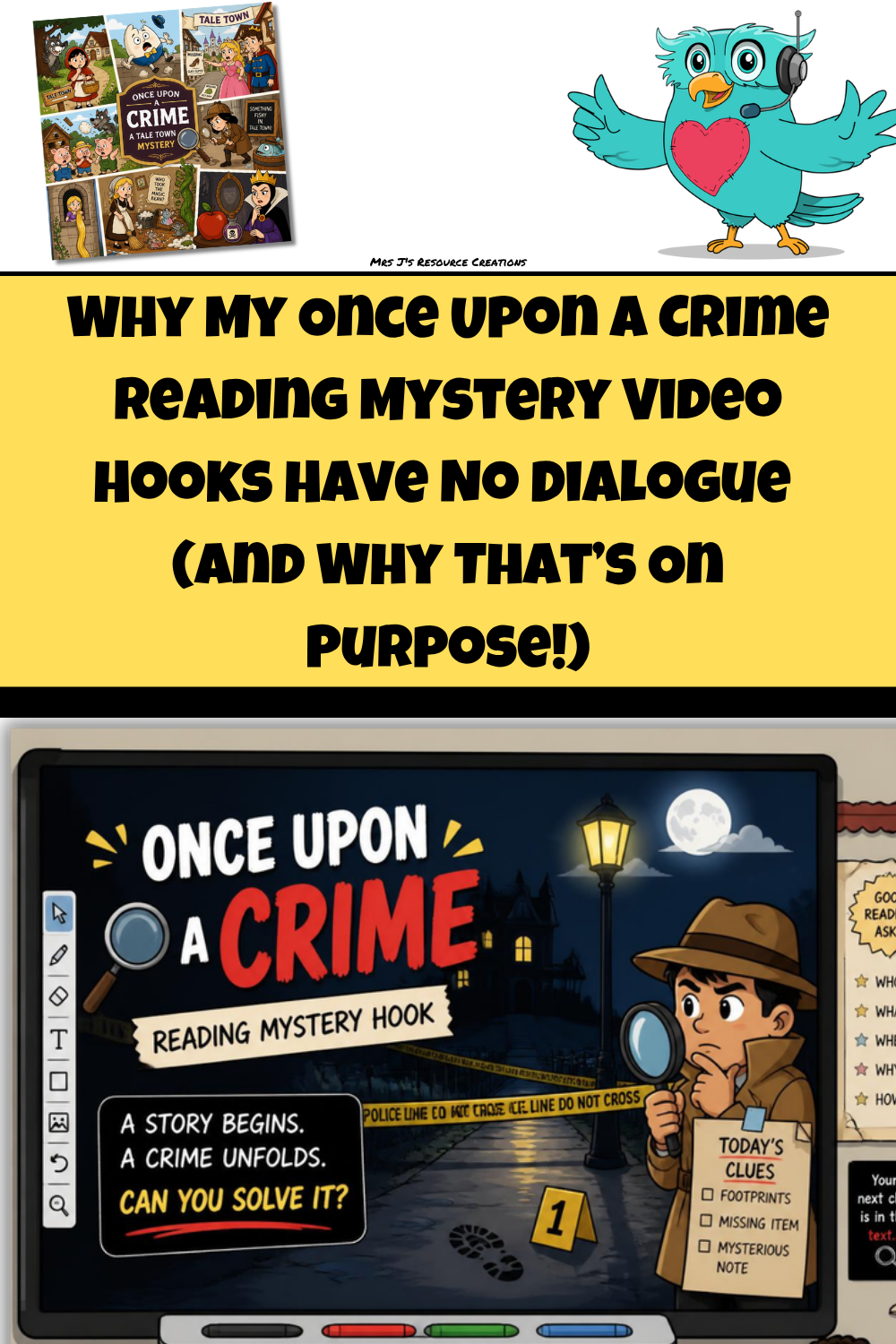
Dialogue-Free Video Hooks: Our Once Upon a Crime Reading Mystery Video Hooks intentionally use visual storytelling without spoken dialogue so students have to watch closely, infer motives, and dive eagerly into the reading passages!
4. Getting Started: Your First Steps
Ready to incorporate more visual learning tools into your classroom routine? Start small with these four steps:
Choose One Unit or Lesson: Pilot visual documentation or a visual mystery hook in a single lesson this week.
Set Clear Objectives: Tell students exactly what visual details, clues, or learning moments they should capture or look for.
Provide a Model Example: Show one clear example on your whiteboard so students know what thoughtful visual work looks like.
Build in Weekly Reflection Time: Set aside a few minutes each week for students to share and discuss their visual collections or deductions with peers.
Remember, the goal isn’t to create professional-looking layouts—it is to spark authentic observation and deeper thinking through the power of pictures!