10 Fun Ways to Practice Addition for Kids (Games, Toys and Free Mini Mysteries)
Quick answer: The best fun ways to practice addition are little and often, with a mix of hands-on games and short written practice. Roll dice and add, play a doubles “snap” card game, build towers with bricks or linking cubes, jump along a floor number line, run a pretend shop, and finish with a one-page math mystery. Match the numbers to your learners (sums within 10 or 20 for K-1, within 100 or 1,000 for 2-3, and multi-digit numbers for 4-5), and teach a strategy such as counting on, making 10 or doubles alongside each activity.
Are your students bored with addition worksheets, or lacking the motivation to keep practicing? I have been there too. Below are 10 low-prep ideas that have worked well for me in the classroom and at home. Each one has tips for K-1, 2-3 and 4-5, plus a quick materials list, so you can pick what suits your learners today.
What are 10 fun ways to practice addition?
Here are my favorites, in no particular order. You do not need to do them all; two or three in a week is plenty.
1. Play doubles and near doubles “Snap”
Snap is fast, noisy and great for mental addition. Make a deck with addition facts on some cards (such as 4 + 5) and answers on others (such as 9). Players take turns flipping a card onto a middle pile. If the new card matches the one before it (a fact and its sum), the first player to put a hand on the pile and call “Snap!” keeps the pile. The player with the most cards at the end wins. It works as a warm-up, a math center or an early finisher game, and it is a lovely follow-up after teaching the near doubles strategy. (You may know my original near doubles snap cards from my TPT store.)
K-1: Use doubles to 5 + 5 and their sums (3 + 3 and 6).
2-3: Add near doubles such as 6 + 7 and 13. Ask players to say the strategy: “double 6 is 12, plus 1 is 13.”
4-5: Use doubles of bigger numbers, such as 25 + 25 and 50, or 150 + 150 and 300.
Materials: index cards or cardstock, a marker, 2-3 players.
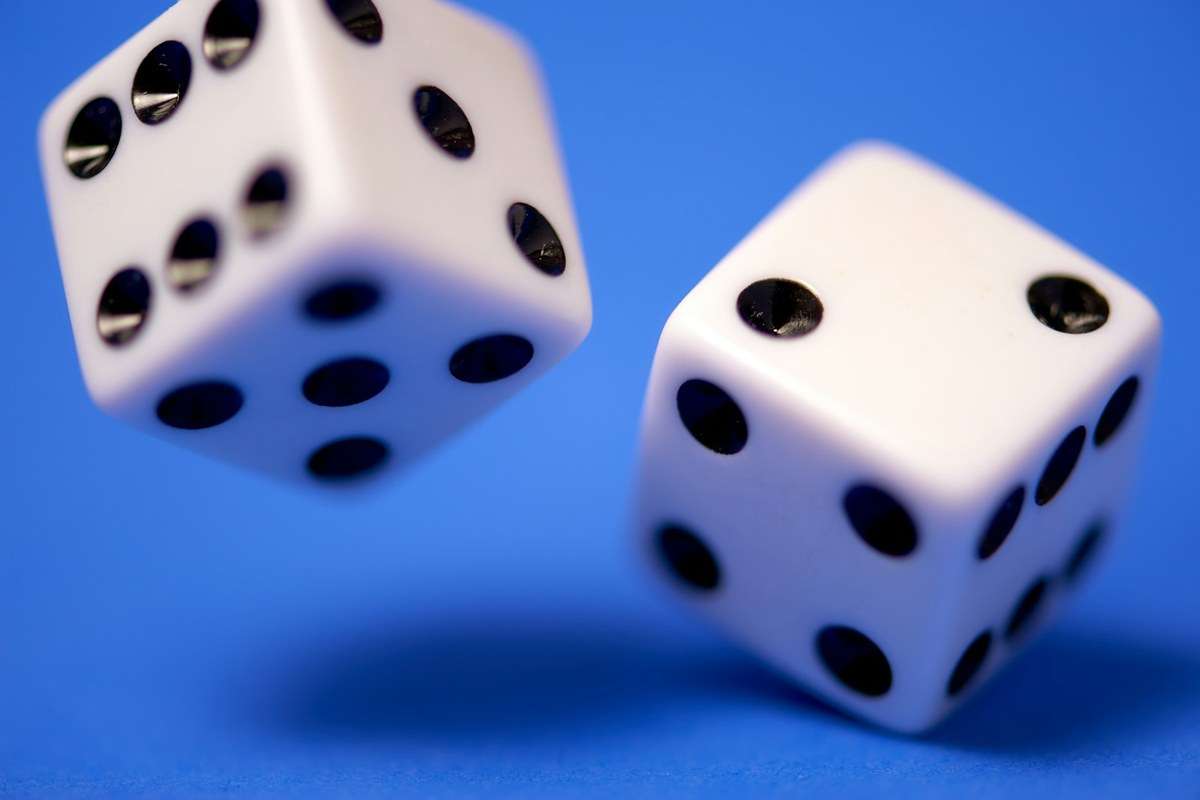
2. Roll, add and compare with dice
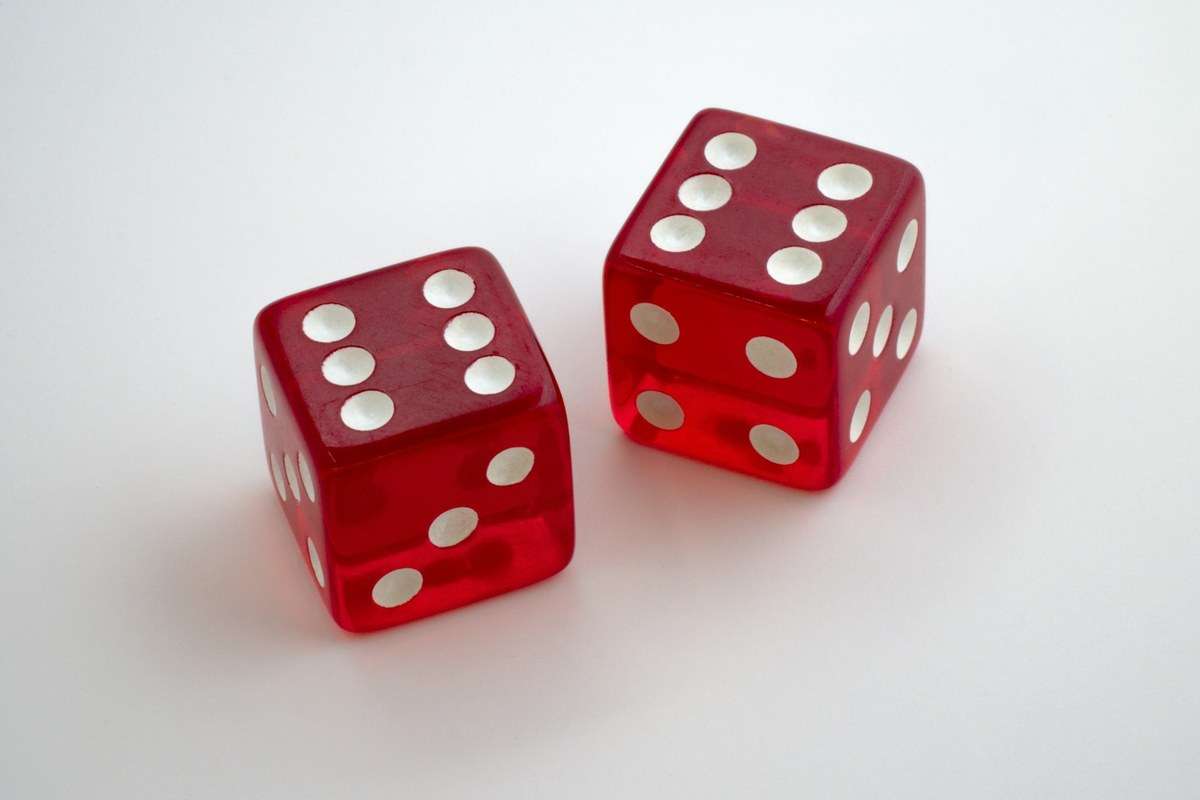
Partners take turns rolling dice, making numbers and adding them on paper or a whiteboard. Whoever has the greater total wins a point for that round. First to 10 points wins. To differentiate, add more dice for bigger numbers, or use fewer dice for single-digit facts.
K-1: Roll two dice and add the dots. Sums go from 2 to 12, and students can count on from the bigger number.
2-3: Roll four dice and make two 2-digit numbers. For example, a roll of 3, 5, 2 and 6 could become 35 + 26 = 61.
4-5: Roll six dice to make two 3-digit numbers, such as 452 + 316 = 768. For a twist, the player who makes the largest possible sum wins.
Materials: 2-6 dice, paper or mini whiteboards, pencils.
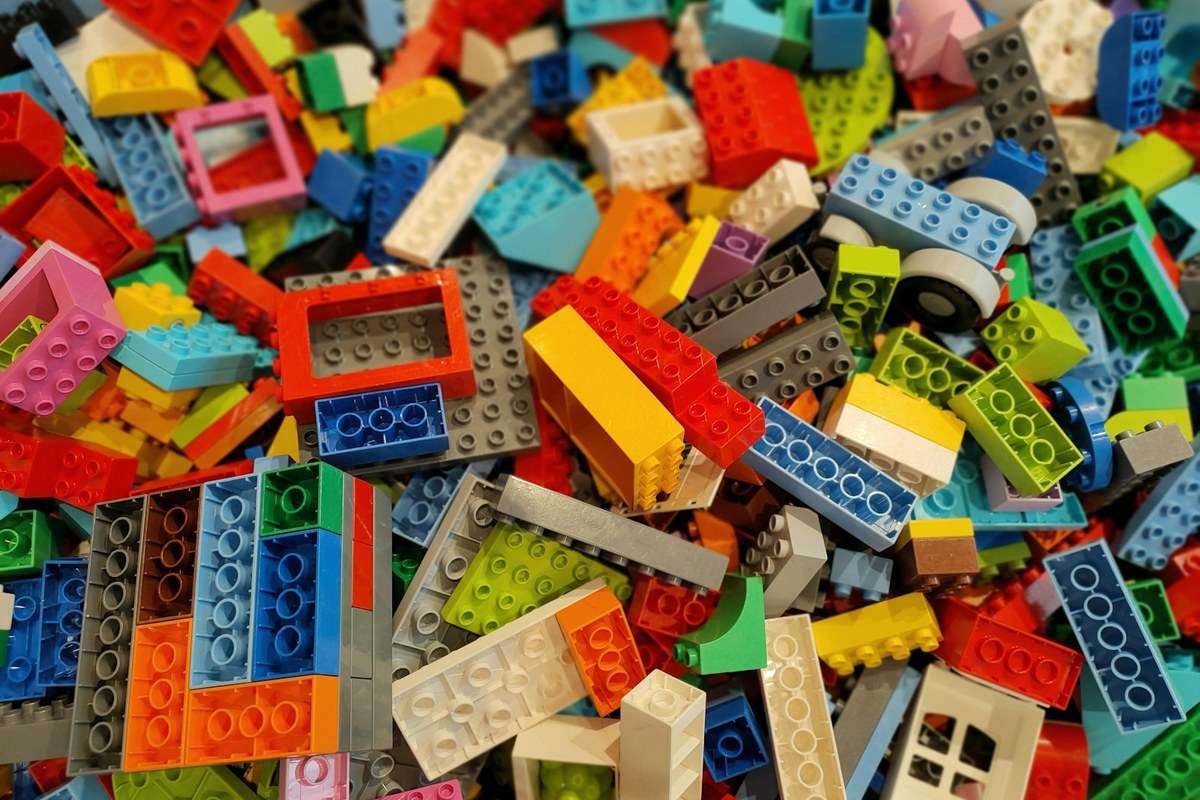
3. Build addition towers with building bricks
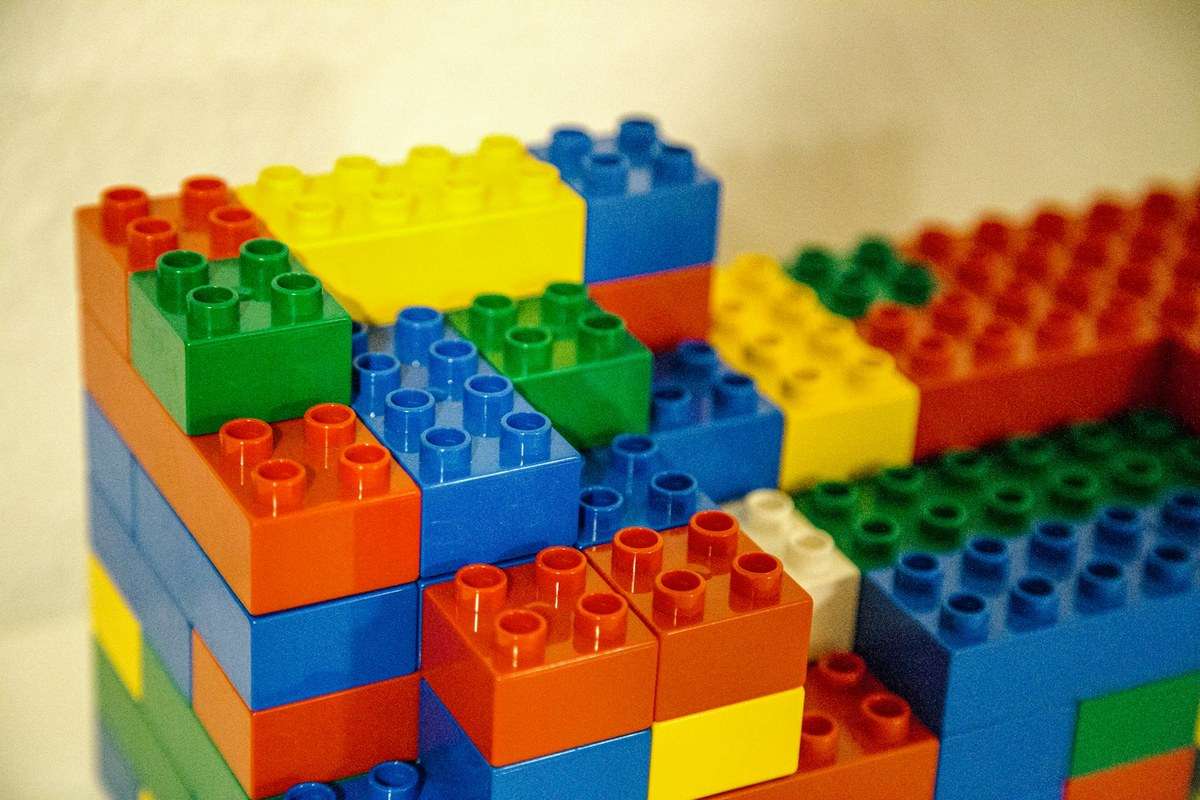
Building bricks are a fantastic free manipulative if you already have a tub at home or school. Students build two towers, write the matching addition sentence, then snap the towers together to check the total.
K-1: Build a tower of 4 bricks and a tower of 3 bricks, then join them: 4 + 3 = 7.
2-3: Count the studs instead. A brick with 8 studs plus a brick with 4 studs makes 8 + 4 = 12. Challenge students to find all the brick pairs that make 10.
4-5: Give each brick color a value (for example red = 25, blue = 10, yellow = 5) and ask students to build a creation worth exactly 100.
Materials: a tub of building bricks, paper for recording.
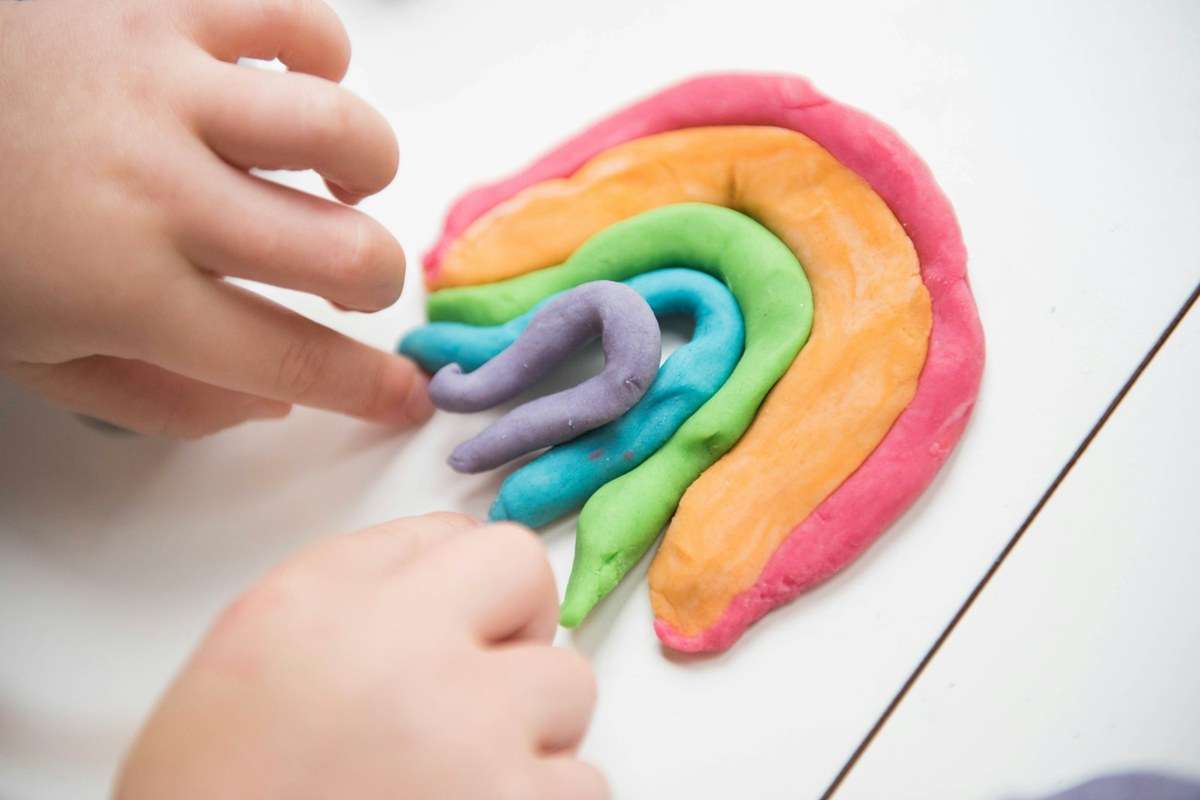
4. Make play dough addition mats
Play dough keeps little hands busy and makes addition feel like play. Students roll small balls of dough to show each part of an addition fact, then squish them together to see the total.
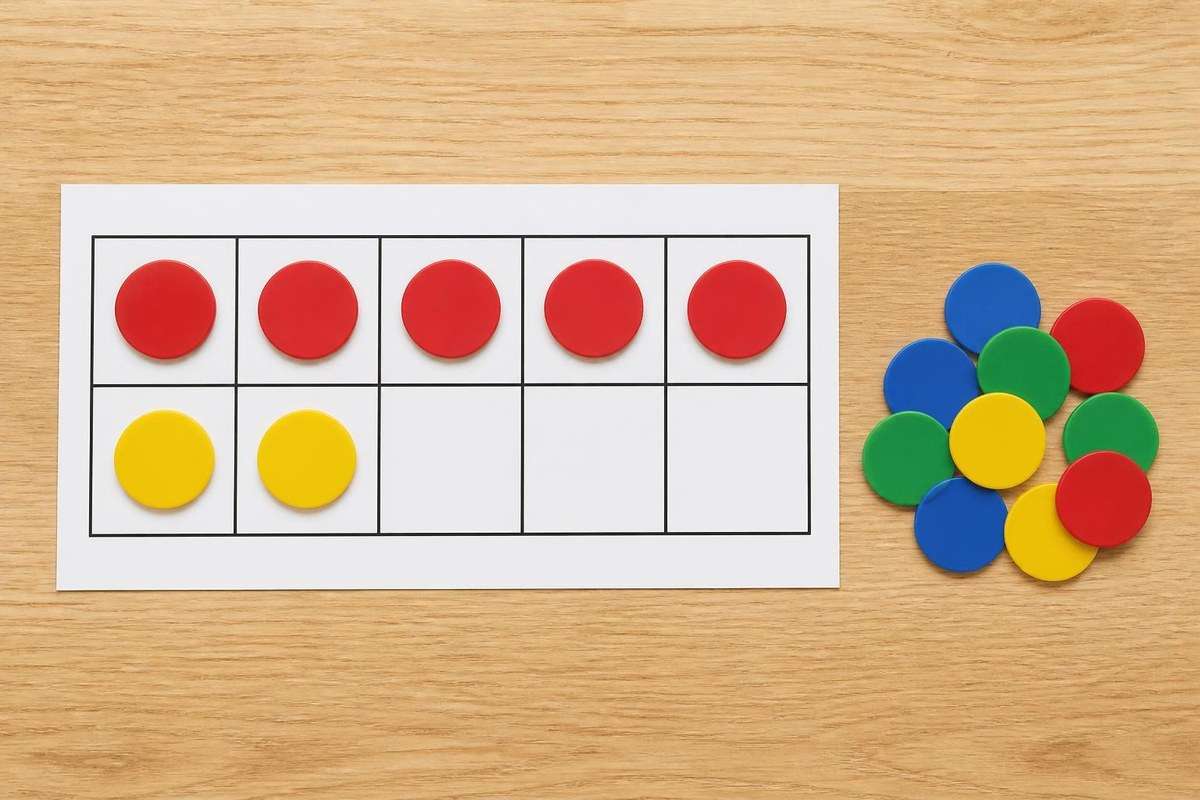
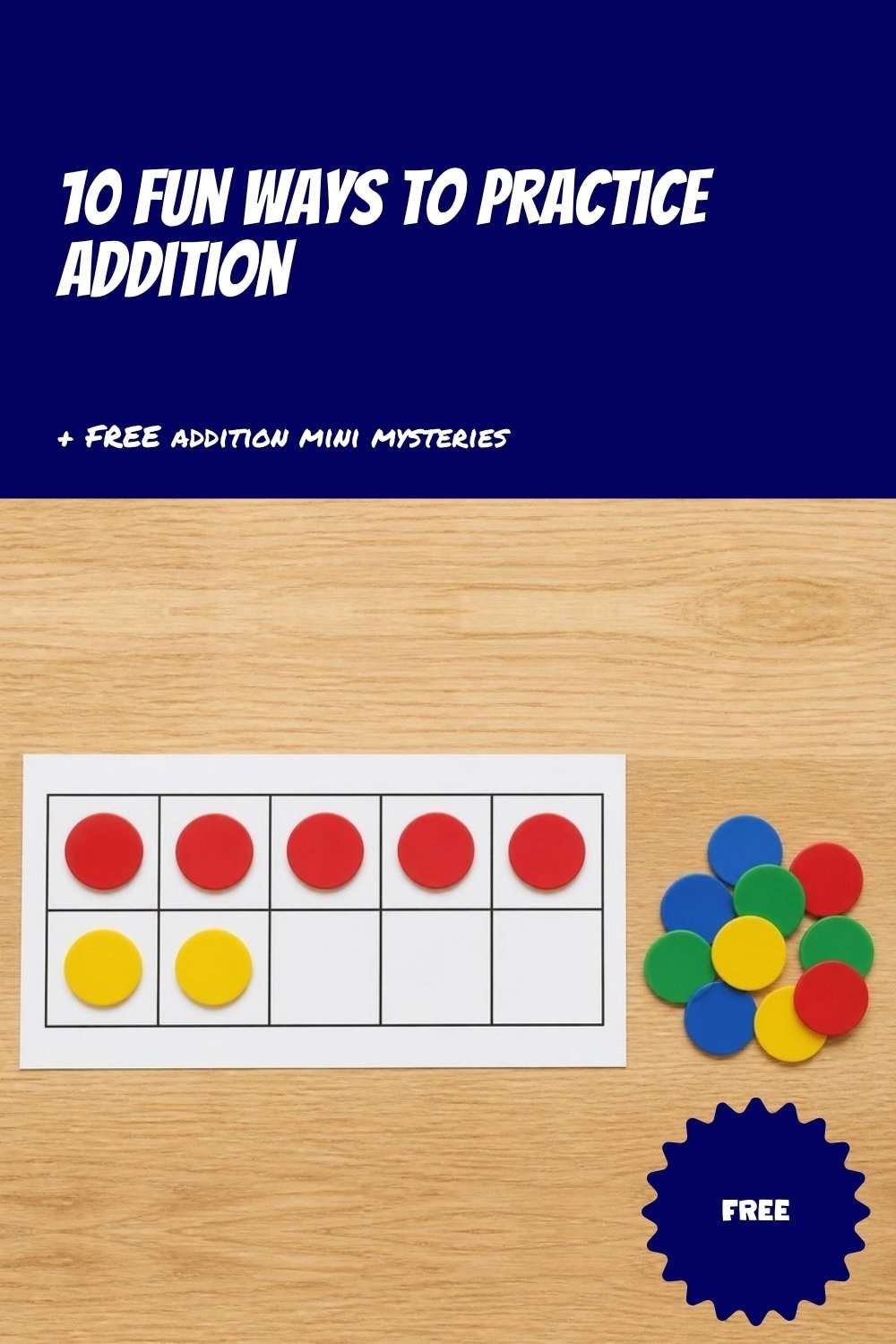
K-1: Draw a ten frame on paper (or slip one in a sheet protector). Roll 3 red balls and 4 yellow balls, place them in the frame, and count: 3 + 4 = 7.
2-3: Roll “snakes” for tens and small balls for ones. Show 23 + 14 as 3 snakes and 7 balls, which is 37.
4-5: Use dough to model regrouping. When there are 10 balls, squash them into one snake (a ten) and record the trade.
Materials: play dough, a printed or hand-drawn ten frame, a sheet protector (optional).
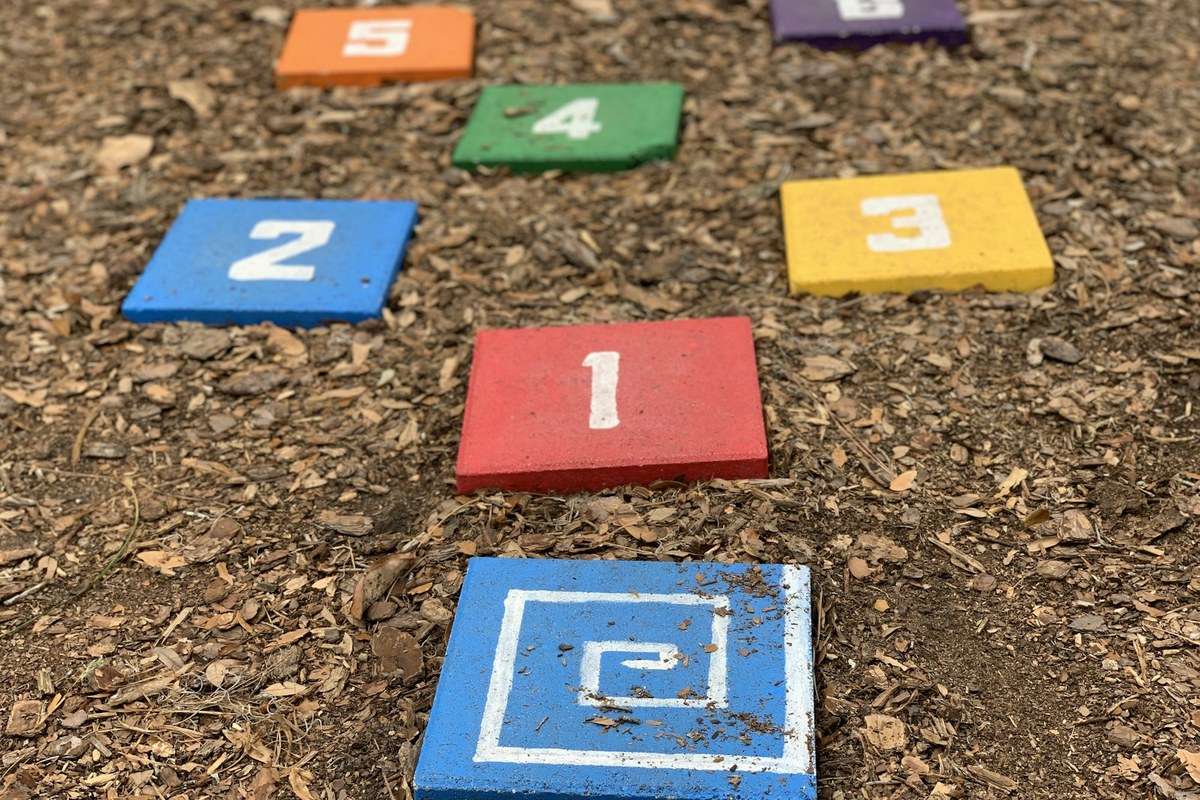
5. Jump along a giant number line
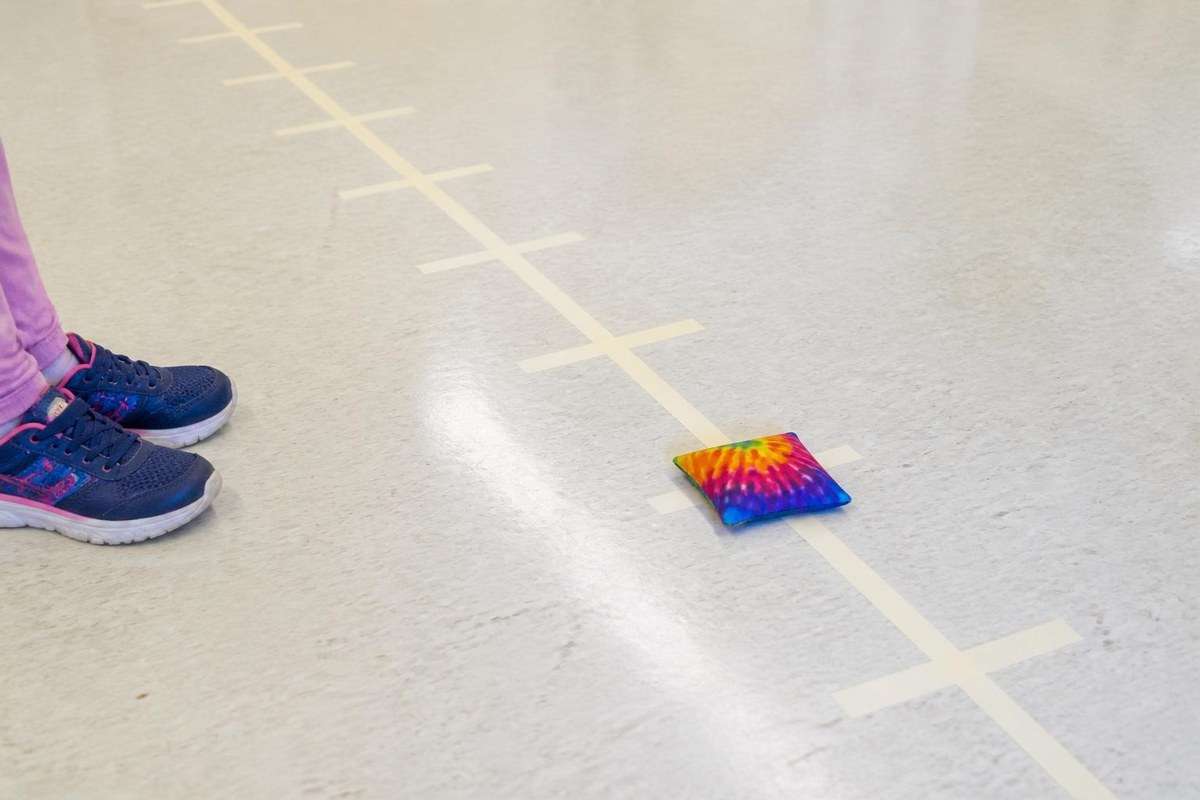
Movement helps a lot of kids remember what addition looks like. Make a number line on the floor with masking tape or sidewalk chalk. Call out a fact, and a student starts on the first number and jumps forward to add.
K-1: Start at 5 and jump 4 spaces to land on 9, so 5 + 4 = 9. Say each number out loud while jumping (counting on).
2-3: Label the line in tens. For 38 + 20, start at 38 and make two big jumps: 48, 58.
4-5: Draw an “open” number line on paper. For 198 + 47, jump 2 to reach 200, then 45 more to land on 245.
Materials: masking tape or chalk, a marker, a bean bag to mark the landing spot (optional).
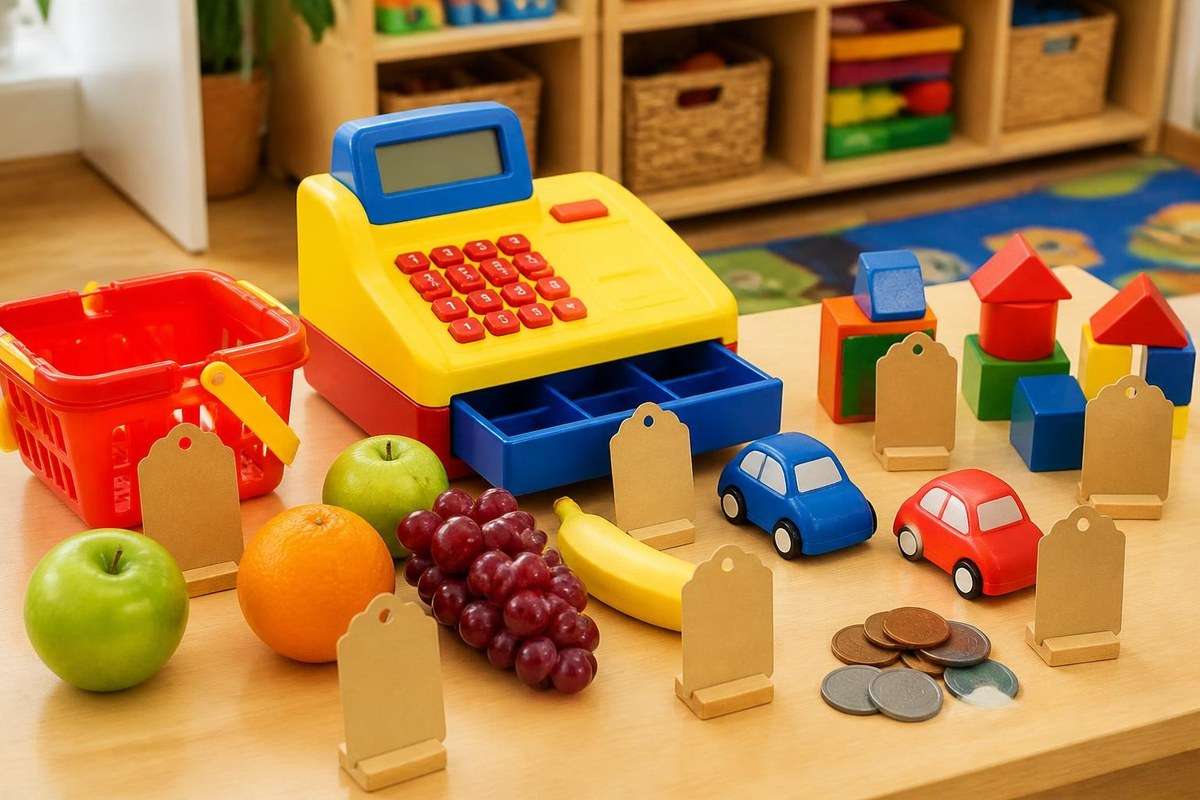
6. Go shopping in a pretend classroom shop
Role play is one of the most real-world ways to practice addition. Set up a small shop with toys, books or grocery items from the cupboard. Add sticky-note price tags (to save time, group several items under one price). Give students some pretend money. Before going to the “register,” they add up their bill to check they have enough. At checkout, a classmate checks the total with a calculator. If the answer matches, they get more money to shop again.
K-1: Use whole numbers from 1 to 10, such as 3 cents + 4 cents = 7 cents.
2-3: Use prices like $0.45 and $0.30, so a two-item bill is $0.45 + $0.30 = $0.75.
4-5: Give a $20 budget and require three items. A $6.75 item plus an $8.50 item is $15.25, which leaves $4.75 for the third item.
Materials: a toy cash register or calculator, items to “sell,” sticky notes, play money.
7. Brew up Potion Groceries
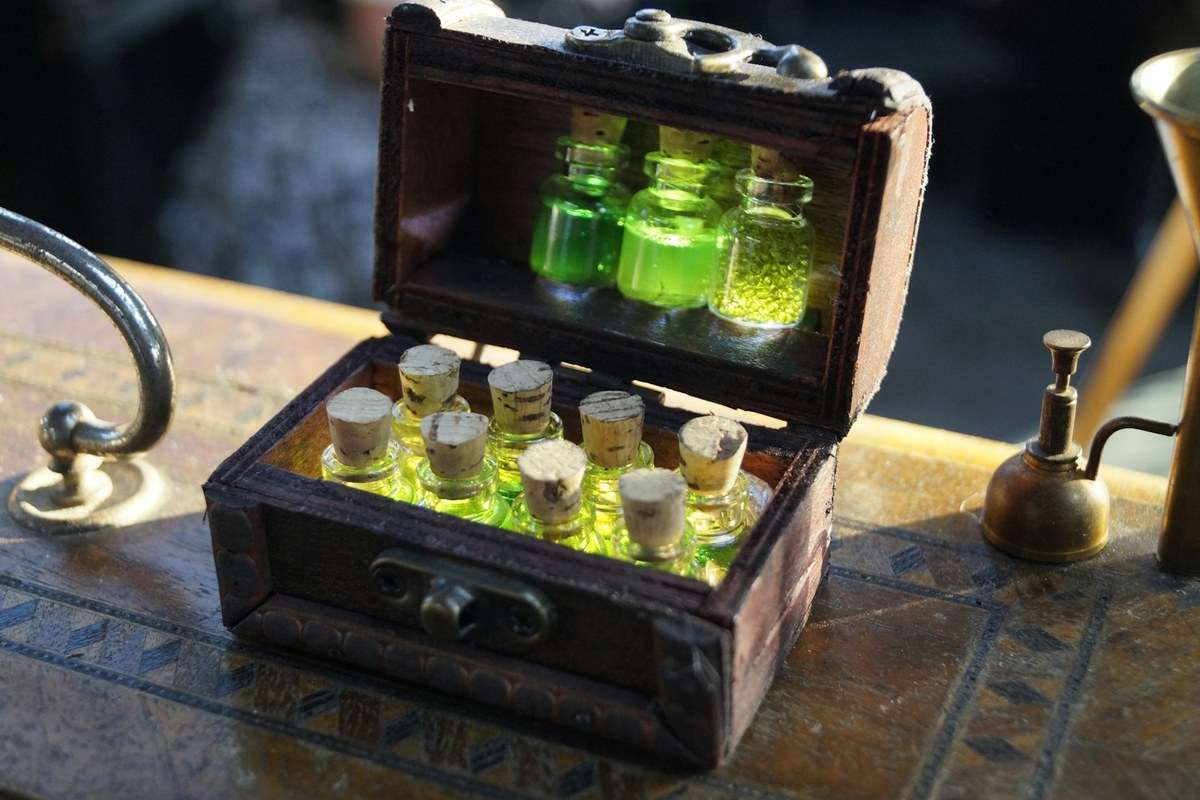
This is the shop idea with a magical twist, and it is a hit around Halloween. Set up a few small jars of colored water, give them strange “potion ingredient” names, and add a price tag to each. Students shop for ingredients while sticking to a budget, which means plenty of adding (and some problem solving).
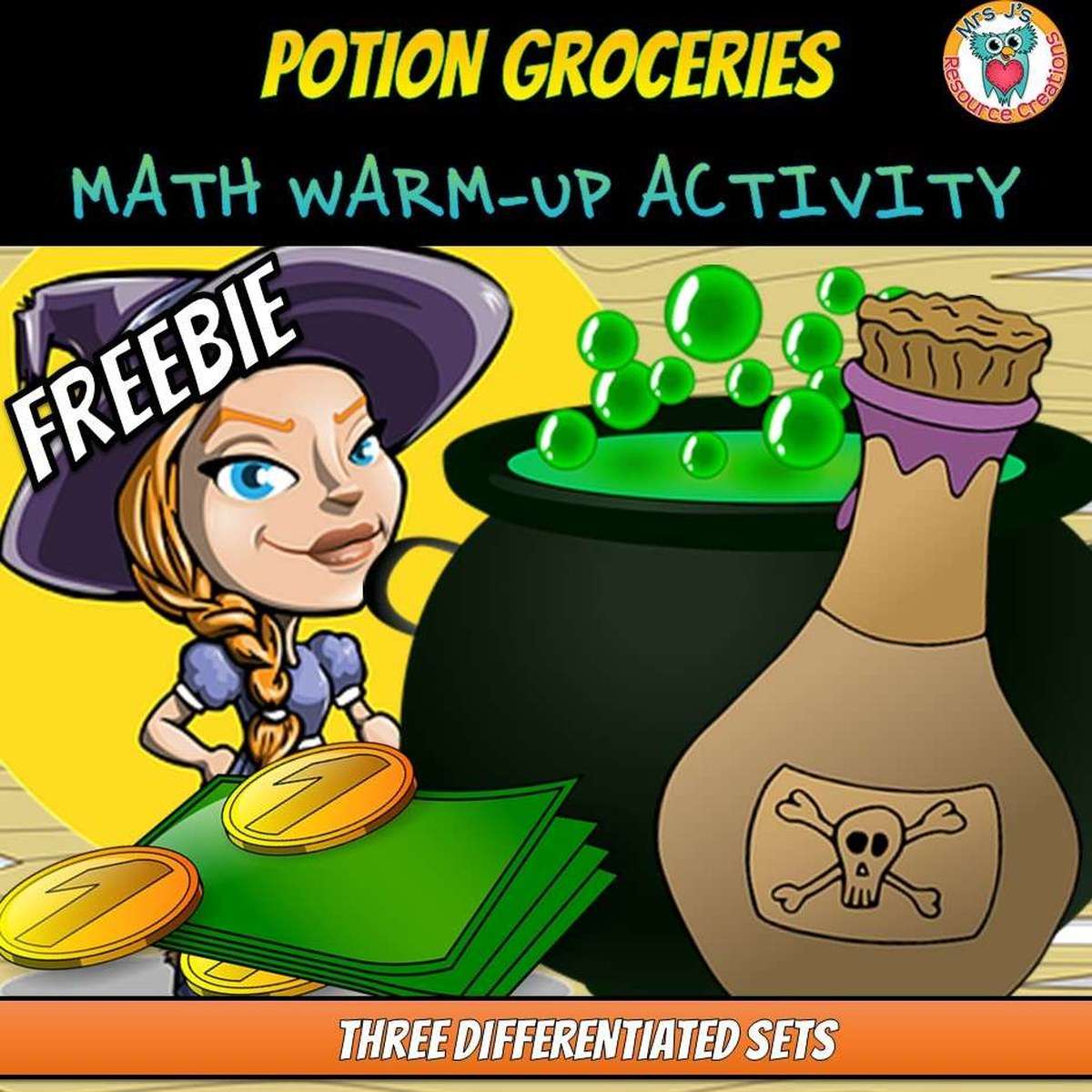
If you would like it ready-made, my Potion Groceries Math Warm-Up Activity is free. It includes three differentiated sets marked E (easy), M (medium) and H (hard).
K-1: Use whole-dollar prices and buy two ingredients at a time.
2-3: Use the easy or medium set and buy three ingredients.
4-5: Use the hard set and add multi-step budget rules.
Materials: small jars or bottles, food coloring, labels, price tags (or the free printable).
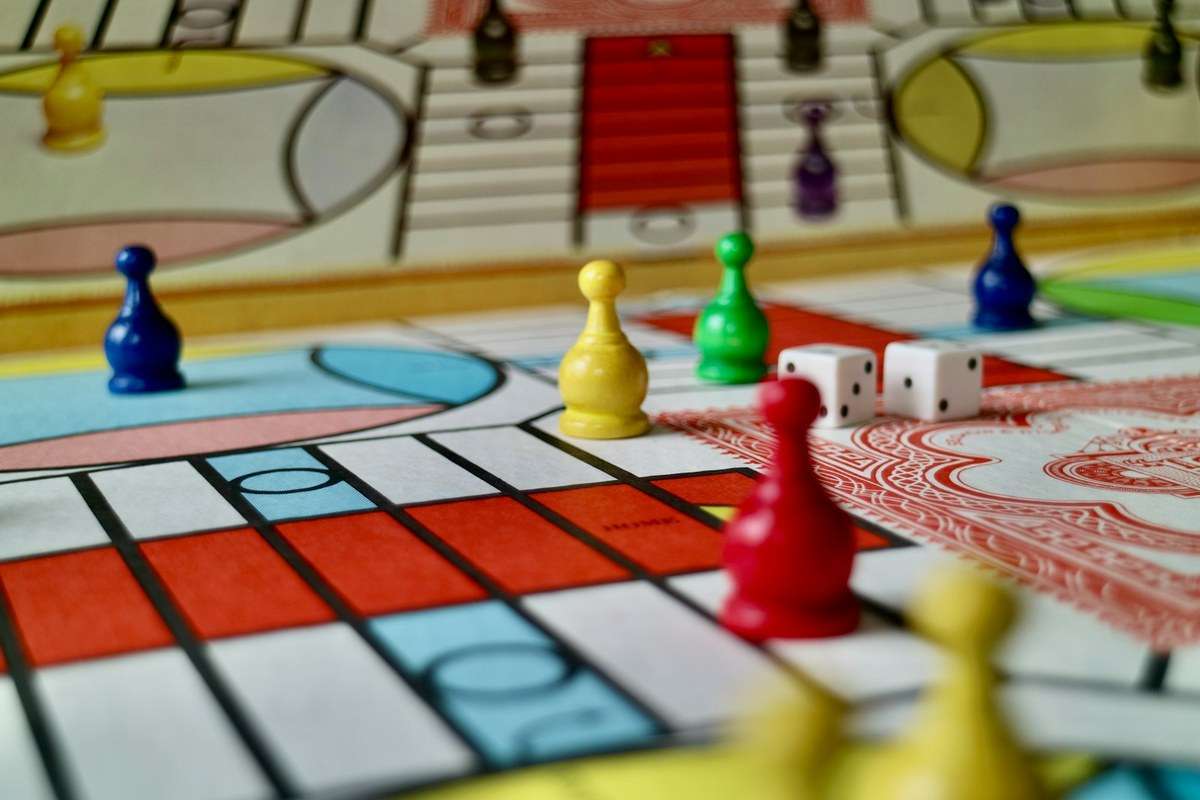
8. Play an addition board game
Board games turn practice into a friendly competition. A simple version: students roll a die, answer an addition card, and move only if they are correct. You can make your own track on a file folder, or use a ready-made set. (Some of you may know my “Bug Boost” addition word problem board game from my TPT store.)
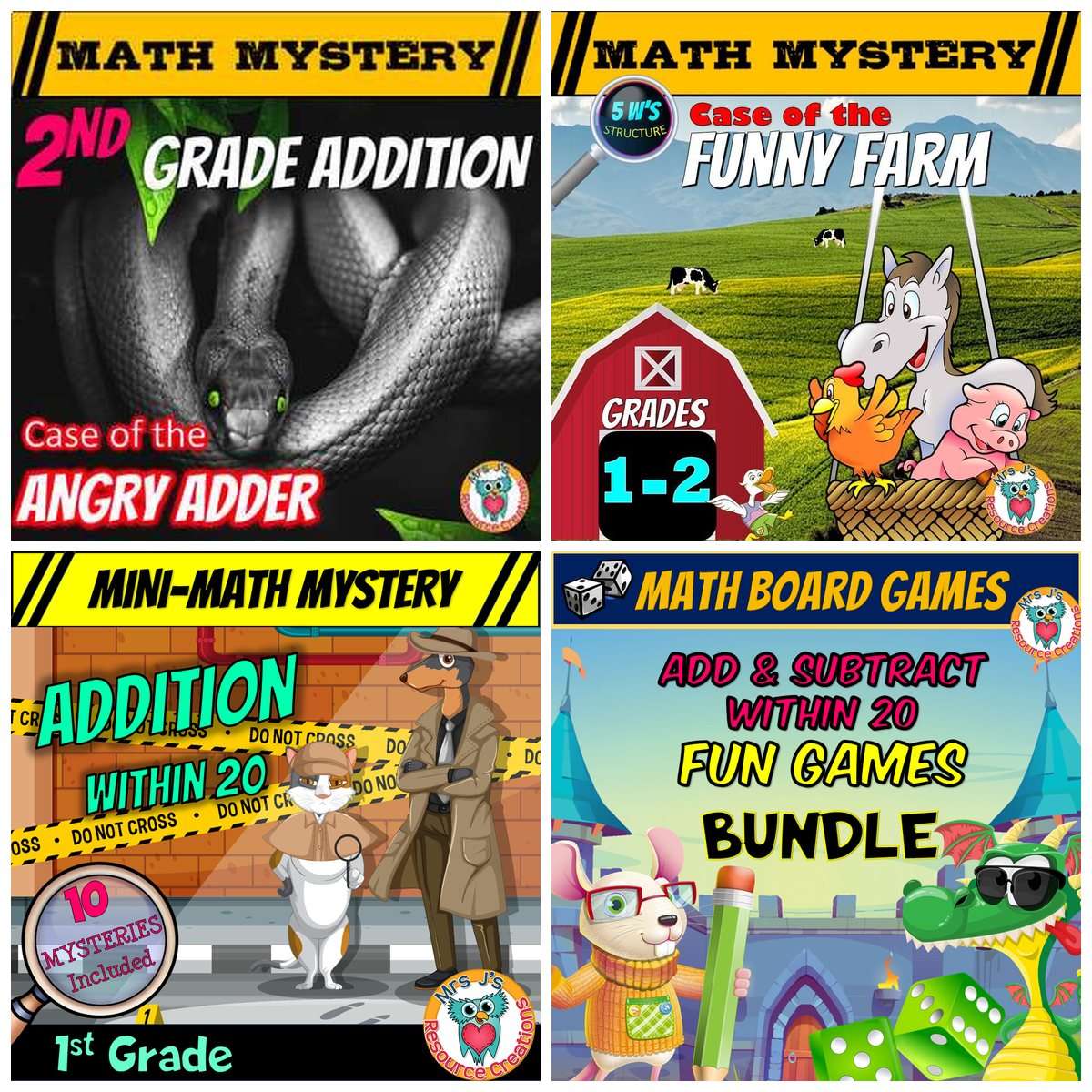
For a print-and-play option, the Add & Subtract within 20 Math Board Games Bundle has themed board games, each in three differentiated versions, with color and black-and-white printing options.
K-1: Use facts within 10, and let students use counters to check.
2-3: Use facts within 20 and 2-digit word problems.
4-5: Make cards with multi-digit word problems. Players must show their working to move.
Materials: a game board (homemade or printed), a die, counters as player pieces, addition cards.
K-1: Keep sessions short (5-10 minutes) and sit nearby to talk about strategies.
2-3: Pair students so they explain each answer to a partner.
4-5: Ask students to record two problems they found tricky and how they solved them.
Materials: a tablet or computer, an internet connection, headphones (optional).
10. Solve an addition math mystery
Math mysteries are my favorite way to make addition practice feel like a game. Students solve addition problems to unlock clues, then use the clues to rule out suspects until they crack the case. Use one clue per session, add a mystery to your math centers, set it as an early finisher task, or send it home. New to them? My post on what a math mystery is gives a quick overview.
K-1: Read the story aloud and work through one short page together.
2-3: Let pairs work on a clue each day and compare their thinking.
4-5: Students work independently, then explain the evidence that ruled each suspect out.
Materials: a printed mystery (or the Google Slides version where included), pencils, a highlighter for crossing out suspects.
Want to try one for free? Keep reading.
Where can I get free addition mini math mysteries?
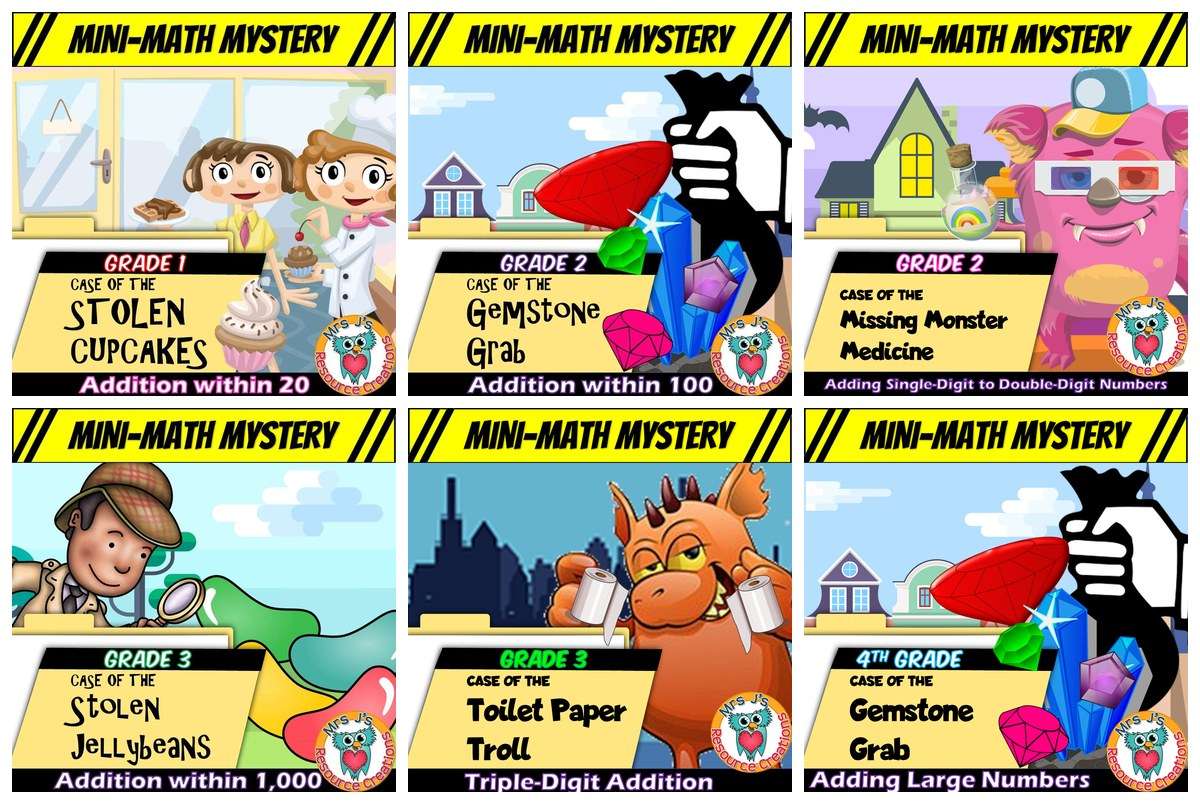
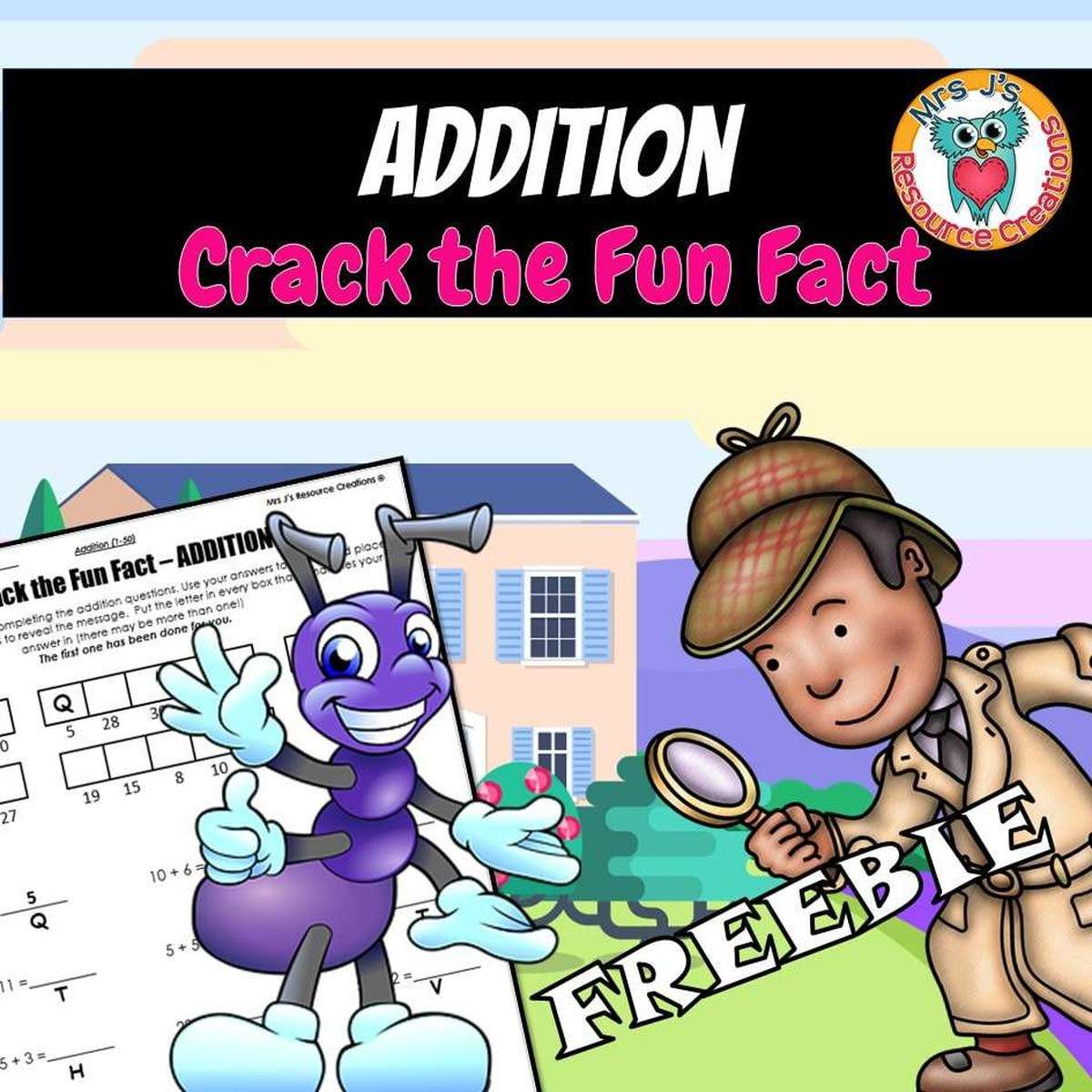
Mini-Math Mysteries are one-page, game-like activities: students solve the problems and use their answers to eliminate possibilities until one remains. They are quick to print and great for centers, review, early finishers or homework. These addition minis are free:
Which addition math mysteries are good for a longer lesson?
If you want a bigger “main event,” these full-length mysteries have five clues to crack. You may have seen them in my TPT store; the links below go to my own site.
Case of the Angry Adder – Addition Math Mystery: the same story is written at different grade levels, with different math in each edition. It includes an optional video hook to set the scene, and the newer editions also offer a Google Slides version. Choose the 1st Grade, 2nd Grade, 3rd Grade, 4th Grade or 5th Grade edition.
What toys and manipulatives help kids learn addition?
You do not need fancy equipment. Many of the best addition tools are toys you may already have. Here is how I use each one.
Dice
Tip: Roll two dice and add. Rolling a double (like 6 + 6 = 12) is a perfect moment to practice doubles. Best for K-3; add more dice for 4-5.
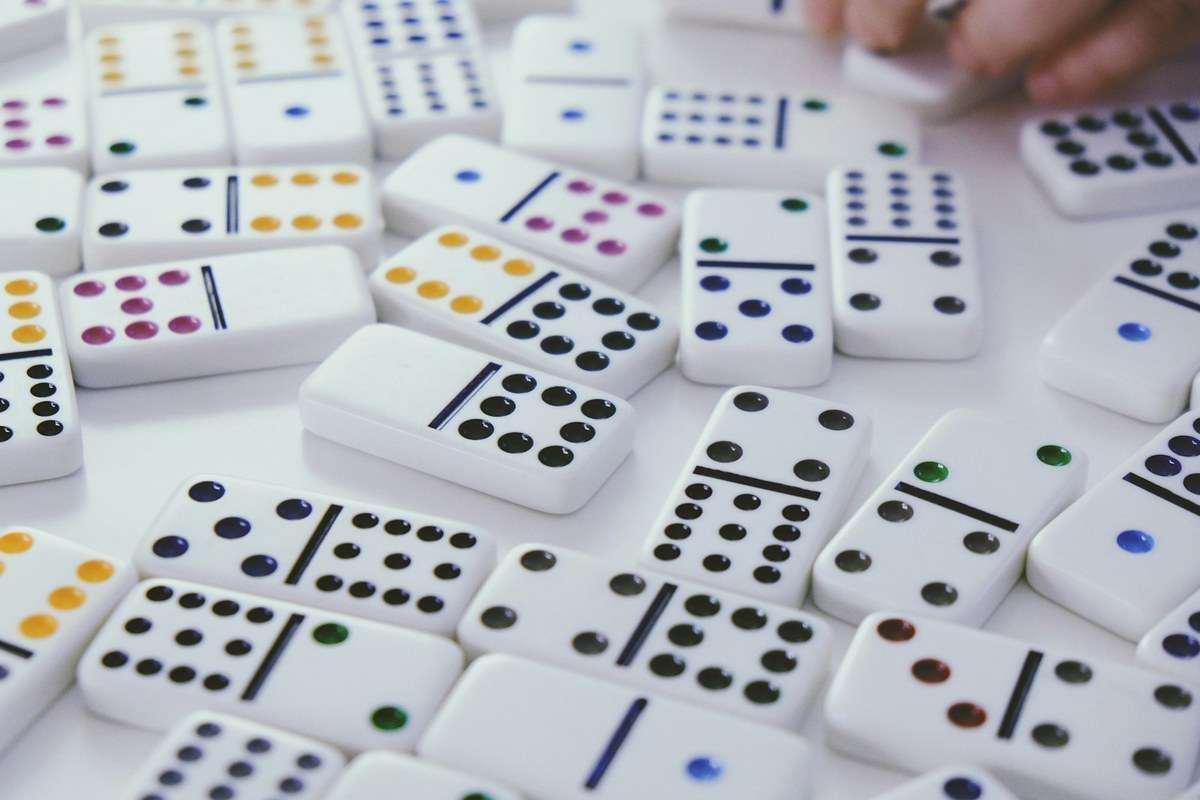
Dominoes
Tip: Each domino is a ready-made addition fact. Add the two sides, then sort the dominoes by their totals. Best for K-2.
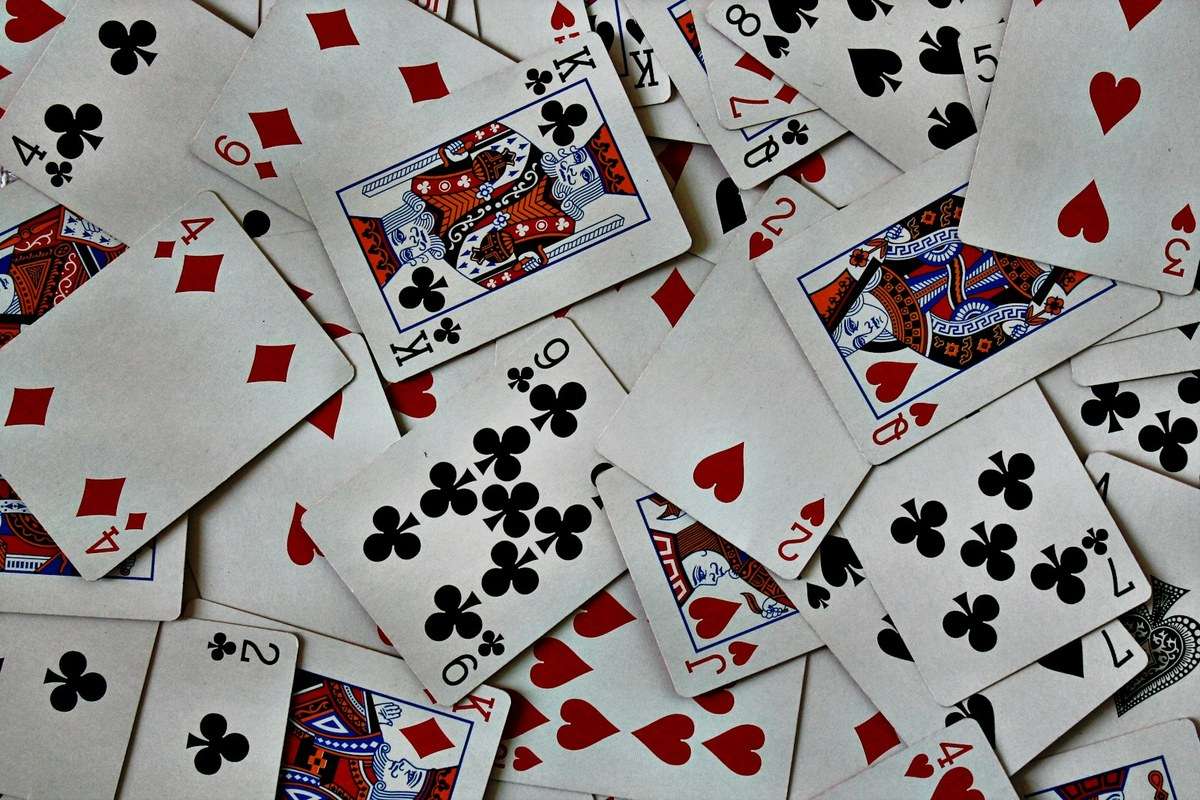
Playing cards
Tip: Take out the face cards (aces count as 1) and play “make 10”: find two cards that add up to 10, like 7 + 3. Best for K-3; flip three or four cards to make larger sums for 4-5.
Building bricks
Tip: Build two towers, add them, then snap them together to check. Counting studs is great for skip counting and bigger sums. Best for K-3.
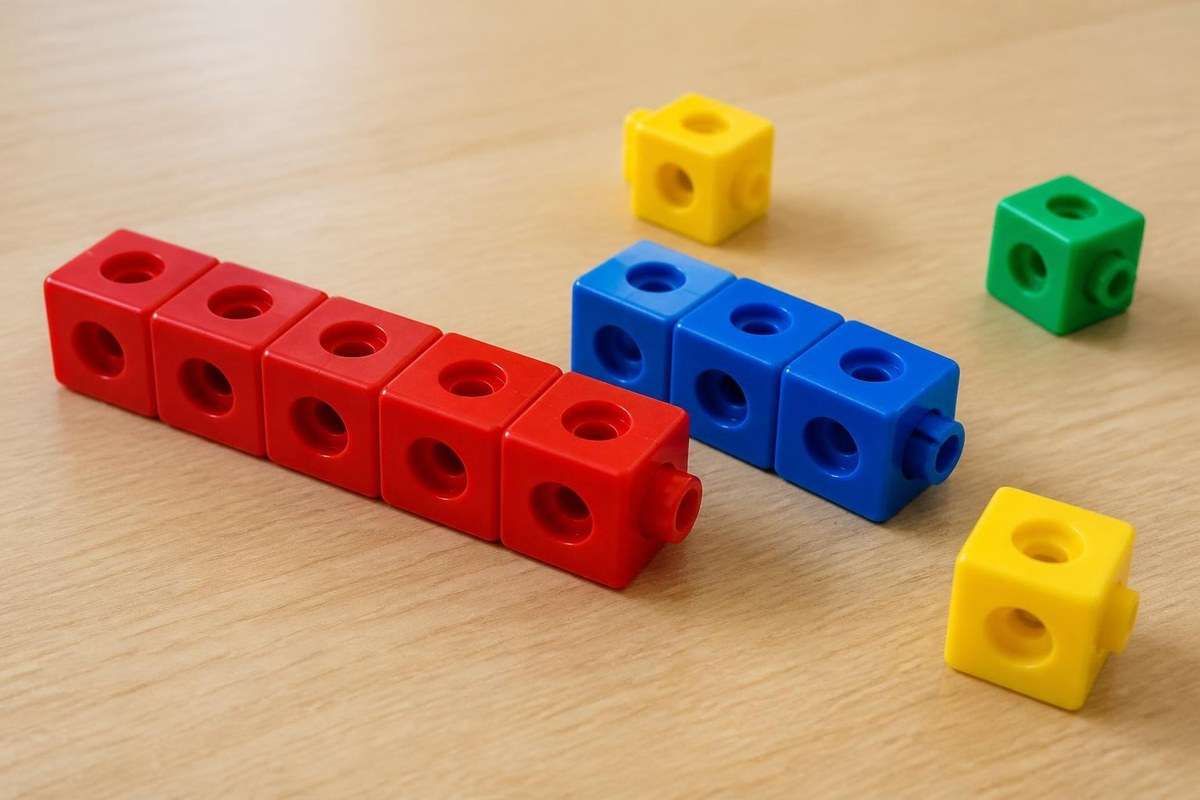
Linking cubes
Tip: Make two “trains” in different colors (5 red and 3 blue), join them, and count the new train: 5 + 3 = 8. Best for K-2.
Ten frames and counters
Tip: Fill the frame with two colors to see facts at a glance (5 + 2 = 7), and to see how many more make 10 (3 more). Best for K-1.
Number lines
Tip: Hop forward to add, by ones at first and then in jumps of 10. An open (blank) number line works well for mental math. Best for K-5.
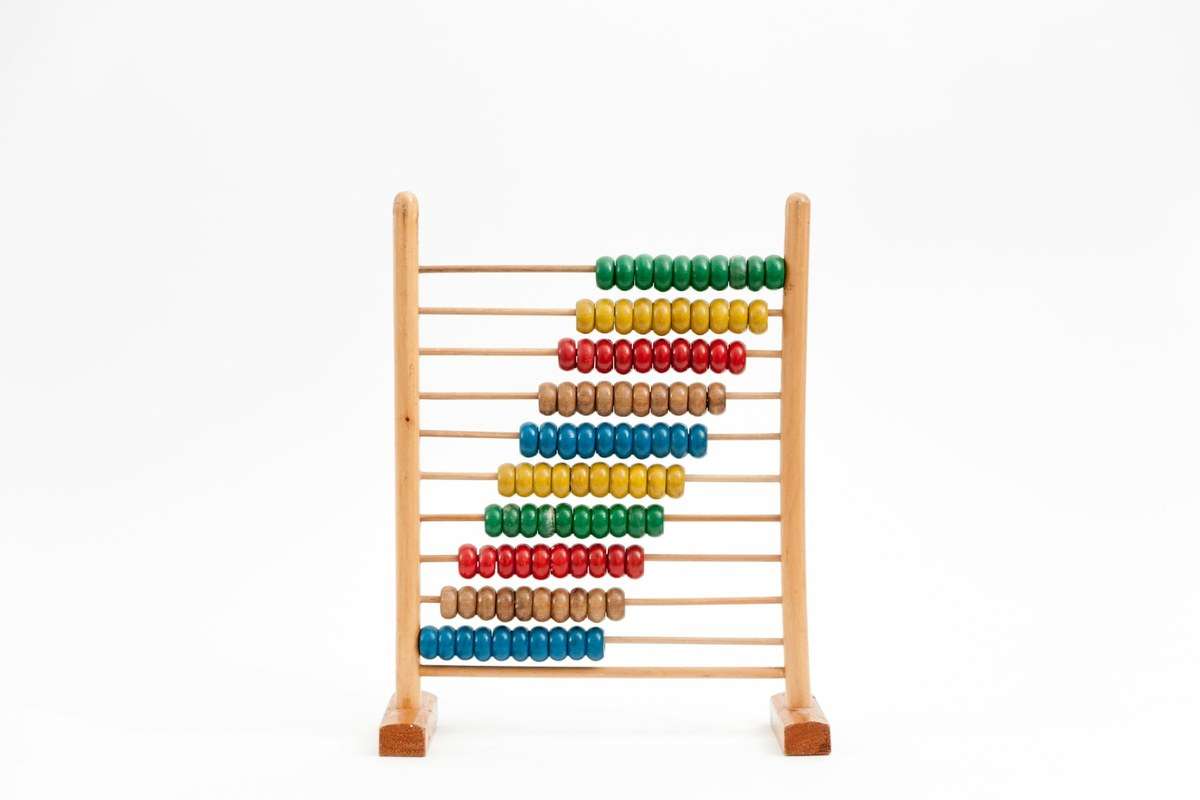
Abacus or rekenrek
Tip: Slide beads across to show each number. Bead frames make it easy to see making 10: for 8 + 5, slide 2 beads to finish the row of 10, then 3 more, so the answer is 13. Best for K-2.
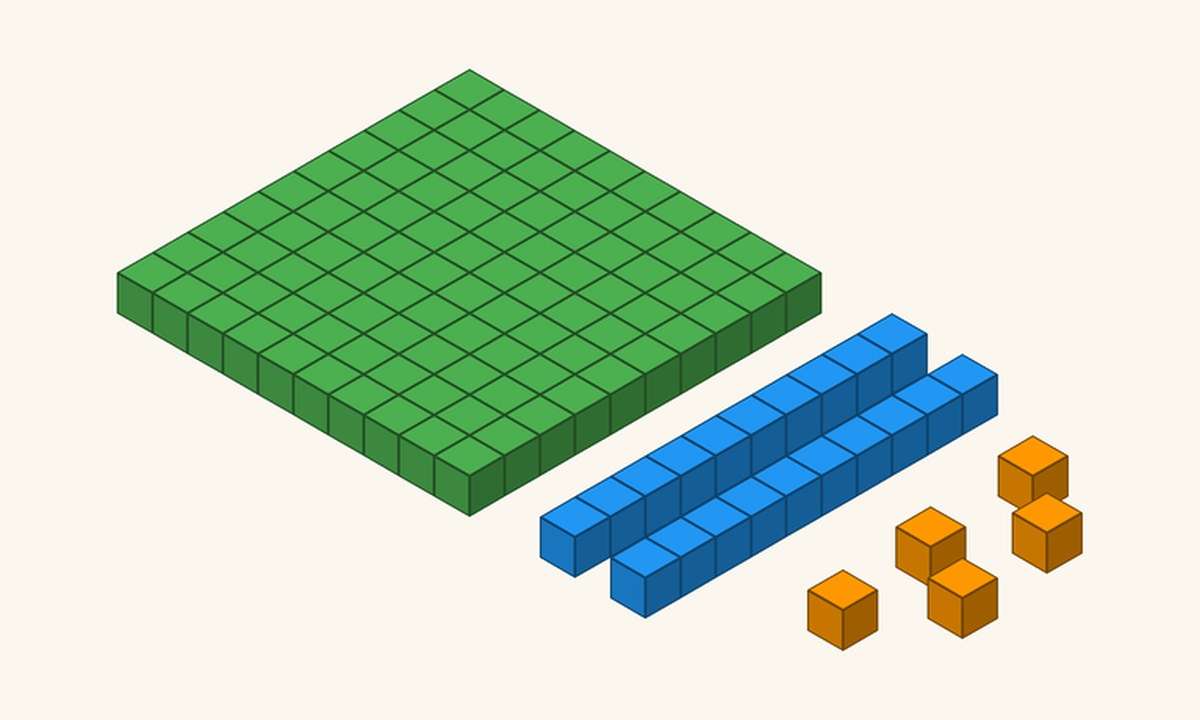
Base-ten blocks
Tip: Build each number with hundreds, tens and ones, push them together, and trade 10 ones for a ten whenever you can. That trade is regrouping. Best for 2-4.
Toy coins
Tip: Count up a handful of coins, or “buy” things in a pretend shop. Money is a natural way to practice adding by 5s, 10s and 25s. Best for 1-4.
Which addition strategies should kids learn?
Games are more powerful when kids have a strategy to use, not just their fingers. Here are the big ones, roughly in the order children usually learn them:
Counting on: start from the bigger number and count up. For 9 + 3, say “9… 10, 11, 12.” So 9 + 3 = 12.
Making 10: break one number apart to complete a 10. For 8 + 5, think 8 + 2 = 10, then 10 + 3 = 13.
Doubles and near doubles: learn doubles first (6 + 6 = 12), then use them for near doubles (6 + 7 is 6 + 6 + 1, which is 13).
Place value: add tens to tens and ones to ones. For 34 + 25, 3 tens + 2 tens = 5 tens and 4 + 5 = 9, so the total is 59.
Regrouping: when the ones add up to 10 or more, trade 10 ones for 1 ten. For 47 + 38, 7 + 8 = 15, so write 5 and regroup 1 ten; then 4 + 3 + 1 = 8 tens. The answer is 85. The same idea works for bigger numbers: 256 + 178 = 434, and 2,345 + 1,678 = 4,023.
Short, frequent practice works better than long sessions. Five to ten minutes a day with a game, a few flash cards or a one-page mystery, paired with a strategy like making 10 or doubles, builds fluency without the boredom.
How can I make addition fun at home?
Use what you have: roll dice at the kitchen table, add up prices at the grocery store, play cards, or build with bricks. Kids rarely notice they are practicing math when it feels like a game.
What addition should kids know in each grade?
In many US classrooms that follow the Common Core standards, first graders add within 20, second graders become fluent with facts within 20 and add within 100 and 1,000 using place value, and fourth graders fluently add multi-digit numbers with the standard algorithm. Every child moves at their own pace, so use these as a guide rather than a rule.
What toys help kids learn addition?
Dice, dominoes, playing cards, building bricks, linking cubes, ten frames with counters, number lines, a rekenrek or abacus, base-ten blocks and toy coins are all great. See the toys and manipulatives section above for a quick tip for each.
Are the mini math mysteries really free?
Yes, the six addition Mini-Math Mysteries listed above are free downloads in my store. The full packs and the longer math mysteries are paid resources.
Share your favorite addition game
What is your favorite way to practice addition? I would love to hear what works for your learners, so please share your ideas in the comments below.